Attorneys for Federal Employees — Nationwide
Nearly 200,000 federal workers and supporters follow our updates across TikTok, Instagram, YouTube, Facebook, and LinkedIn. Each briefing gives you the three stories that actually matter to your job, plain‑English legal guidance, and one short practice to protect your peace of mind. If it helps you, forward it to a colleague—new readers can subscribe at https://fedlegalhelp.com/newsletter.
Today at a Glance
- TSA union rights: A judge told TSA to pause a move that would change collective bargaining rights—watch for notices and keep records.
- Hatch Act update: OSC says former federal employees can still face Hatch Act action for conduct during federal service—don’t assume you’re “in the clear” after leaving.
- Coast Guard oversight: GAO says required reports on sexual assault/harassment were late or incomplete—expect more scrutiny and more formal compliance steps.
Top Stories:
1. Judge: TSA ‘Plainly’ Violated Court Order with Renewed Union Busting Push
Source: Government Executive — January 15, 2026
TL;DR: A federal judge ordered TSA to stop a planned change that would have affected TSA employees’ collective bargaining rights, because the judge found it would violate an existing court injunction.
For federal employees, this means:
- If you’re a TSA bargaining-unit employee, your current collective bargaining framework (including the current CBA and grievance/arbitration processes) should remain in place for now, unless the court changes the injunction.
- If TSA issues new guidance, FAQs, or emails about union rights, save them—those records can matter if policies shift quickly.
- If you have a grievance or workplace dispute pending, confirm deadlines and next steps with your union in writing.
Legal Insight:
This is an injunction enforcement issue in federal court. That means the agency usually cannot simply ignore the injunction—it generally must follow it unless the court changes it. If you’re affected, keep copies of all notices and take screenshots if something changes in an online portal. If deadlines are moving or you’re unsure what process applies (grievance, arbitration, or another route), get clarity fast. Because deadlines can be short, consider talking with your union and a qualified federal employment attorney.
2. Updated Hatch Act Guidance Affects Current and Former Federal Employees
Source: FedSmith — January 14, 2026
TL;DR: Updated OSC guidance says OSC can pursue Hatch Act enforcement against former federal employees for violations that happened while they were still federal employees.
For federal employees, this means:
- If you engaged in partisan political activity while you were a federal employee, you may still face Hatch Act exposure even after you separate.
If you are in a “further restricted” position or a sensitive role, treat political activity as a compliance issue—get clarity before acting.
If OSC contacts you, preserve records and respond carefully (don’t delete or “clean up” posts or messages after the fact).
Legal Insight:
The Hatch Act is enforced through OSC investigations and often connects to MSPB processes for remedies. If you’re unsure whether an activity is allowed, ask your agency ethics office for written guidance and keep a copy. If you are contacted by OSC, save the communication and preserve related social media posts, emails, and texts. Do not change or delete records once you learn of a potential investigation. Because investigations and response deadlines can be short, consider talking with your union and a qualified federal employment attorney.
3. Coast Guard: Actions Needed to Ensure Complete and Timely Reports to Congress Regarding Sexual Assault and Sexual Harassment
Source: GAO — January 14, 2026
TL;DR: GAO says the Coast Guard’s required reports to Congress about sexual assault and sexual harassment were incomplete and late, and later reports had not been issued as of December 2025.
For federal employees, this means:
- Coast Guard employees may see more formal reporting steps, training, and compliance checks tied to harassment prevention and response.
- Increased oversight can also bring more documentation requirements for supervisors and managers.
- If you report harassment or retaliation, the paper trail matters—save what you submit and when you submitted it.
Legal Insight:
When reporting is late or incomplete, it can create real problems later—missing records make it harder to prove what the agency knew and when it acted. If you experience or witness sexual harassment or retaliation, document what happened, report it through the right channel, and keep copies of everything you submitted. Supervisors should follow required procedures promptly and avoid informal “handle it quietly” approaches that leave no record. Because EEO, OSC, and internal reporting timelines can be short and fact-dependent, consider talking with your union and a qualified federal employment attorney.
Legal Tip of the Day
When You See Harassment Happen
Even if you’re not the direct target, what you see and hear in the workplace can matter legally. If you witness harassment or discriminatory comments, quietly note the date, time, who was present, and what was said. If the affected coworker chooses to report it, your documentation and willingness to confirm what you saw can be important. Be cautious about discussing it widely with colleagues or in group chats; that can complicate things. If you’re unsure what to do as a bystander or feel supervisors are ignoring complaints, our office can discuss options that protect both you and your colleagues.
In Case You Missed It
A few quick hits from our recent videos and posts:
HHS Rescinds NIOSH RIF Notices: What It Means for Feds
|

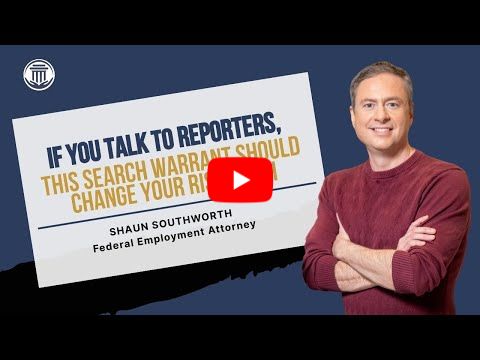
Reporter Search Warrants and Federal Employee Risk
|
Why Federal Employment Law Requires Specialized Attorneys
|

Worried About Retaliation or Being Targeted for Speaking Up?
If you’ve reported misconduct, safety concerns, discrimination, or waste/fraud/abuse—and now you’re seeing sudden schedule changes, bad performance reviews, or threats of discipline—you may be in whistleblower or retaliation territory.
We represent federal employees who:
-
Reported concerns and then saw adverse actions
-
Were sidelined, reassigned, or given impossible workloads after speaking up
-
Face investigations, PIPs, or proposed removals that look like payback
-
Need help navigating OSC complaints, EEO claims, or MSPB appeals tied to retaliation
A free, confidential consultation can help you sort out what’s normal agency behavior and what may cross the line—and what to do before your options narrow.
👉 Schedule Your Free Consultation Today
|

Disclaimer:
This briefing is for general informational purposes only and does not constitute legal advice or create an attorney‑client relationship. Federal employment law is fact‑specific and time‑sensitive; you should consult a qualified attorney about your own situation and deadlines. Past results do not guarantee future outcomes.
Your service is worth protecting. Let's protect it together at Southworth PC.

Responses