Attorneys for Federal Employees — Nationwide
Nearly 200,000 federal workers and supporters follow our updates across TikTok, Instagram, YouTube, Facebook, and LinkedIn. Each briefing gives you the three stories that actually matter to your job, plain‑English legal guidance, and one short practice to protect your peace of mind. If it helps you, forward it to a colleague—new readers can subscribe at https://fedlegalhelp.com/newsletter.
Today at a Glance
- OPM may change how performance ratings work — could affect awards, promotions, and PIPs.
- Big court move on collective bargaining — some agencies may change contract terms faster while the case continues.
- Clearance system delays — onboarding and reinvestigations may stay slow and uneven.
Top Stories:
1. OPM May Change How Performance Ratings Work
Source: Federal News Network — February 24, 2026
TL;DR: OPM proposed a rule that could allow “forced distribution” ratings again—meaning agencies could cap how many people get top ratings.
For federal employees, this means:
- Your annual rating (and related awards/promotions) may be influenced by agency-wide limits, not just your supervisor’s view.
- If your agency adopts this approach, expect closer review of “outstanding” ratings and more pressure to prove results with numbers and written proof.
- If you’re placed on a PIP or your rating drops, documentation will matter even more.
Legal Insight:
Performance ratings can lead to real consequences under Title 5, including PIPs and performance-based actions. Keep a simple “proof folder” with work products, metrics, emails praising your work, and key deadlines. Ask in writing for the performance standards and any agency guidance on rating distributions. If a negative rating could affect your job, pay, or future opportunities, consider talking with your union and a qualified federal employment attorney because deadlines can be short.
2. Court Ruling May Speed Up Bargaining Changes at Some Agencies
Source: Federal News Network — February 26, 2026
TL;DR: A federal appeals court lifted a lower court order that had paused executive actions affecting collective bargaining at more than 20 agencies—while the lawsuit continues.
For federal employees, this means:
- Some agencies may move faster to change or end certain bargaining practices while the case is still being fought.
- If you rely on your contract for grievance steps, official time, scheduling, telework terms, or discipline procedures, you should confirm what’s in effect right now.
- If you’re mid-grievance or dealing with discipline, do not assume old timelines or steps still apply without checking.
Legal Insight:
Federal labor-management rules come mainly from 5 U.S.C. Chapter 71, but coverage can change depending on national security exclusions and other limits. The practical move: get your union’s guidance in writing on what procedures apply today, and keep copies of any agency notices about changes. If you’re in a time-sensitive process (discipline, grievance, EEO, or an appeal), calendar every deadline and keep proof of what you filed and when. Because deadlines can be short, consider talking with your union and a qualified federal employment attorney.
3. Clearance and Vetting Delays May Keep Affecting Hiring and Access
Source: Government Executive — February 26, 2026
TL;DR: Lawmakers say the background check modernization effort is still struggling, which can keep clearance and onboarding timelines uneven.
For federal employees, this means:
- If you need a clearance or reinvestigation, delays may continue—and requirements may shift as systems change.
- You may be asked to re-submit information or use different platforms during transitions.
- If your offer, reassignment, or job duties depend on clearance timing, you’ll want written milestones from your security office.
Legal Insight:
Clearance and suitability processes often move slowly, but you can still protect yourself by documenting everything. Keep copies of submission confirmations, receipts, and emails about missing items. Respond promptly and in writing, and confirm you’re using official systems and channels. If a suitability/clearance issue starts affecting pay, duties, or job status, consider talking with your union and a qualified federal employment attorney because deadlines can be short.
Legal Tip of the Day
Use Check-Ins to Protect Yourself
Don’t wait for an annual review to find out you’re “not meeting expectations.” Ask your supervisor for regular check-ins and request that key expectations or new assignments be put in writing (even a short email recap works). After a meeting, you can send a polite follow-up: “Here is my understanding of today’s guidance…” and save that email. This creates a record of what you were told to do and when. If your mid-year feedback doesn’t match past guidance, our firm— which only represents federal employees, not agencies—can help you assess whether something more is going on.
In Case You Missed It
A few quick hits from our recent videos and posts:
Telework Denied for “Teamwork”? Know the Law
|

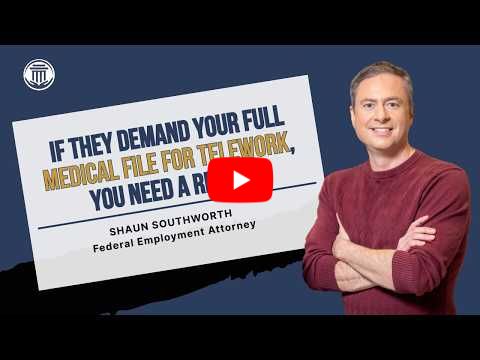
Telework Accommodation and Medical Records
|
Parking Lot Protocol Before a Telework Meeting
|

Worried About Retaliation or Being Targeted for Speaking Up?
If you’ve reported misconduct, safety concerns, discrimination, or waste/fraud/abuse—and now you’re seeing sudden schedule changes, bad performance reviews, or threats of discipline—you may be in whistleblower or retaliation territory.
We represent federal employees who:
-
Reported concerns and then saw adverse actions
-
Were sidelined, reassigned, or given impossible workloads after speaking up
-
Face investigations, PIPs, or proposed removals that look like payback
-
Need help navigating OSC complaints, EEO claims, or MSPB appeals tied to retaliation
A free, confidential consultation can help you sort out what’s normal agency behavior and what may cross the line—and what to do before your options narrow.
👉 Schedule Your Free Consultation Today
|

Disclaimer:
This briefing is for general informational purposes only and does not constitute legal advice or create an attorney‑client relationship. Federal employment law is fact‑specific and time‑sensitive; you should consult a qualified attorney about your own situation and deadlines. Past results do not guarantee future outcomes.
Your service is worth protecting. Let's protect it together at Southworth PC.

Responses