Attorneys for Federal Employees — Nationwide
Nearly 200,000 federal workers and supporters follow our updates across TikTok, Instagram, YouTube, Facebook, and LinkedIn. Each briefing gives you the three stories that actually matter to your job, plain‑English legal guidance, and one short practice to protect your peace of mind. If it helps you, forward it to a colleague—new readers can subscribe at https://fedlegalhelp.com/newsletter.
Today at a Glance
- The VA Told a Federal Court It Restored Its Union Contract — Then Continued Ignoring It: A court ordered the VA to reinstate its collective bargaining agreement with AFGE covering 320,000 employees. The VA issued a memo saying it complied. Then it kept denying employees union representation, telling a new mother her maternity leave didn't apply, and refusing to participate in arbitration. AFGE says the VA has not reinstated a single member's rights.
- New Gallup Data: Federal Employee Engagement Is Beginning to Rebound — Slightly: Research from the fourth quarter of 2025 shows a modest improvement in engagement and a decline in burnout. The Gallup researcher's explanation is worth hearing: some employees made peace with staying, and some made peace with leaving. Either way, the trauma of 2025 is real and the rebound is small.
- Senator Grassley Introduces Two Bills to Expand Whistleblower Protections: The bills would extend coverage to federal employees whose primary job duties involve investigating and reporting wrongdoing — a category that currently falls into a legal gap in the Whistleblower Protection Act.
Top Stories:
1. The VA Was Ordered to Restore Its Union Contract. It Said It Did. Court Documents Tell a Different Story.
Source: Government Executive — March 25, 2026
TL;DR: On March 13, U.S. District Judge Melissa DuBose ordered the VA to reinstate its collective bargaining agreement with AFGE's National VA Council, covering more than 300,000 employees. The VA issued a memo stating it had complied. But according to court documents filed this week by AFGE, the VA has continued denying employees union representation in disciplinary proceedings, told a new mother her parental leave rights under the restored contract did not apply, and refused to participate in arbitration — telling an arbitrator to keep proceedings on hold pending further litigation. The VA's own attorney told the court that restoring the contract does not require the VA to actually follow its terms. AFGE National President Everett Kelley told reporters the department has failed to reinstate a single one of its members' rights since the court order.
For federal employees, this means:
- If you are a VA employee who is a member of AFGE's National VA Council, a court order is in effect requiring the VA to honor your union contract — including Weingarten rights, parental leave rights, progressive discipline, and grievance procedures. The VA's position that it need not follow those terms is the subject of active litigation before Judge DuBose.
- If you have been denied union representation in a disciplinary proceeding, denied contractual leave rights, or told that the contract does not apply since the March 13 order — document every instance in writing and report it to your union immediately.
- This situation — where an agency complies with the letter of a court order while openly defying its substance — is legally and constitutionally significant. It is the kind of conduct that leads to contempt proceedings.
Legal Insight:
Federal employees represented by AFGE at the VA have a court-ordered right to union representation in investigatory interviews that could lead to discipline — commonly known as Weingarten rights. If your supervisor has told you that representation is not available or that the union contract is not in effect, that denial is itself a potential violation of the preliminary injunction now in place. Document the date, the supervisor, and exactly what was said. Contact your union steward immediately, even if you are unsure whether it matters. Because the legal situation at the VA is actively developing and the remedies available to you depend heavily on the specific facts and timing of each event, consider talking with your union and a qualified federal employment attorney right away.
2. Gallup: Federal Employee Engagement Is Starting to Rebound — But the Baseline Remains Low
Source: Federal News Network — March 26, 2026
TL;DR: New Gallup research presented at Federal News Network's CHCO 2026 event shows that federal employee engagement and burnout began to stabilize in the fourth quarter of 2025, after a sharp deterioration through most of the year. The Gallup researcher noted that the rebound appears driven in part by employees who decided to stay making peace with the new environment — and employees who could not make peace leaving. The rate of federal employees actively looking for a new job has also declined relative to their private sector counterparts. The Gallup researcher emphasized this rebound needs to become real momentum, not a temporary plateau.
For federal employees, this means:
- The stabilization is real but fragile. It is not a sign that the workforce crisis is over. It is a sign that the initial shock has passed and people are adapting — which is different from thriving.
- If you are one of the employees who stayed and is adapting, you are not alone. The data confirms that is the majority experience right now.
- If you are one of the employees still struggling — with morale, with health, with uncertainty about what comes next — that is also the majority experience. These things can both be true at the same time.
Legal Insight:
This story does not present an immediate legal issue for most federal employees, but it carries a practical signal worth stating plainly. The employees who are leaving federal service right now are frequently doing so under financial pressure, under hostile conditions, or because they believe they have no options. Some of them do have options — legal ones — that they have not explored. If your decision to leave is being driven by working conditions that feel designed to push you out, by a reassignment that stripped your responsibilities, by retaliation for protected activity, or by a disability the agency is refusing to accommodate, those are potentially actionable facts. Consider talking with your union and a qualified federal employment attorney before making a final decision about your federal career.
3. Senator Grassley Introduces Two Bills to Extend Whistleblower Protections to More Federal Employees
Source: Government Executive — March 23, 2026
TL;DR: Senator Chuck Grassley, R-Iowa, recently introduced two bills designed to close gaps in the Whistleblower Protection Act. One bill would extend whistleblower protections to federal employees whose primary job duty is to investigate and report wrongdoing — a category that currently falls into legal ambiguity because their disclosures are made as part of their official duties rather than as an act of individual conscience. The second bill would extend protections to employees of government corporations. Grassley said in a statement that whistleblowers should not be treated poorly for telling the truth.
For federal employees, this means:
- If your job is to investigate fraud, waste, or abuse — as an IG employee, an auditor, a compliance officer, or a similar role — your whistleblower protections under current law are less clear than you might assume. These bills, if enacted, would address that gap directly.
- The bills are currently proposed legislation, not law. They would need to pass both chambers and be signed before they take effect. That process could take months or years, or may not happen at all. Your current rights are governed by the existing Whistleblower Protection Act, 5 U.S.C. § 2302.
- The timing of this legislation is notable. It comes as the federal government is simultaneously stripping OSC whistleblower access from employees converted to Schedule Policy/Career and as survey data shows three-quarters of the federal workforce does not feel safe reporting wrongdoing.
Legal Insight:
Under the current Whistleblower Protection Act, federal employees are protected from retaliation for disclosing information they reasonably believe evidences violations of law, gross mismanagement, gross waste of funds, abuse of authority, or substantial dangers to public health or safety. That protection applies to disclosures made to Congress, inspectors general, the Office of Special Counsel, and other appropriate authorities. If your disclosure was made in the normal course of your job duties, the legal analysis of whether you are protected is more complicated — which is exactly what Grassley's bill seeks to address. If you have made a disclosure and experienced an adverse action afterward, the sequence of events matters enormously. Because retaliation complaints with OSC have their own deadlines and procedural requirements, consider talking with your union and a qualified federal employment attorney before those windows close.
Legal Tip of the Day
If You’re Considering Filing an EEO Complaint
Filing an EEO complaint is a structured process with strict deadlines. Missing even one step can affect your ability to pursue a claim. Before filing, take time to organize your timeline and supporting evidence. Understand what outcome you’re seeking and what the process involves. Early preparation can make the path clearer and less overwhelming. Southworth PC can help map out the process and avoid common missteps.
In Case You Missed It
A few quick hits from our recent videos and posts:
Southworth PC Expands Support for Federal Employees
|

When “DEI” Becomes a Legal Standard Without a Definition
|
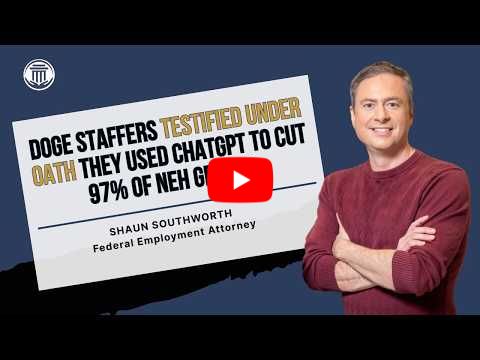
Schedule Policy/Career: Before You Sign the Form
|

DEI Reassignments and Federal Employee Rights
|
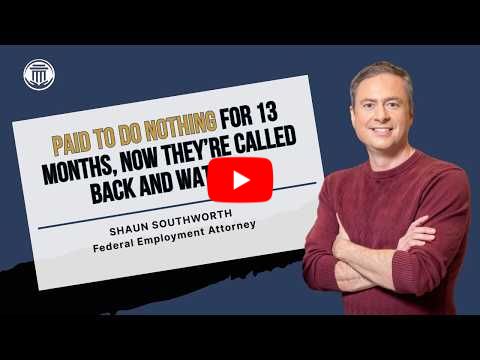
Worried About Retaliation or Being Targeted for Speaking Up?
If you’ve reported misconduct, safety concerns, discrimination, or waste/fraud/abuse—and now you’re seeing sudden schedule changes, bad performance reviews, or threats of discipline—you may be in whistleblower or retaliation territory.
We represent federal employees who:
-
Reported concerns and then saw adverse actions
-
Were sidelined, reassigned, or given impossible workloads after speaking up
-
Face investigations, PIPs, or proposed removals that look like payback
-
Need help navigating OSC complaints, EEO claims, or MSPB appeals tied to retaliation
A free, confidential consultation can help you sort out what’s normal agency behavior and what may cross the line—and what to do before your options narrow.
👉 Schedule Your Free Consultation Today
|

Disclaimer:
This briefing is for general informational purposes only and does not constitute legal advice or create an attorney‑client relationship. Federal employment law is fact‑specific and time‑sensitive; you should consult a qualified attorney about your own situation and deadlines. Past results do not guarantee future outcomes.
Your service is worth protecting. Let's protect it together at Southworth PC.

Responses