Attorneys for Federal Employees — Nationwide
Nearly 200,000 federal workers and supporters follow our updates across TikTok, Instagram, YouTube, Facebook, and LinkedIn. Each briefing gives you the three stories that actually matter to your job, plain‑English legal guidance, and one short practice to protect your peace of mind. If it helps you, forward it to a colleague—new readers can subscribe at https://fedlegalhelp.com/newsletter.
Today at a Glance
- Schedule Policy/Career may begin immediately — Some federal positions could lose key civil service protections starting this week.
- RIF rules may shift toward performance ratings — A proposed rule could change how layoffs are decided across government.
- Court voids major VOA leadership actions — A judge ruled staffing actions may be invalid because the appointment itself was unlawful.
Top Stories:
1. Schedule Policy/Career Conversions Could Begin Soon
Source: Federal News Network — March 6, 2026
TL;DR: The administration may begin converting certain federal positions into Schedule Policy/Career as early as March 9. These roles would move into the excepted service and could lose traditional civil service protections.
For federal employees, this means:
- Employees in policy-related or policy-influencing roles may see changes to their position status.
- Some positions could lose traditional removal protections and appeal rights.
- Agencies may begin issuing notices or updated position descriptions soon.
Legal Insight:
This change comes from OPM’s final Schedule Policy/Career rule, which replaces the earlier Schedule F proposal. The legal debate focuses on whether the executive branch can move career civil servants into this new category while complying with civil service laws and due process protections. If your position may be affected, keep copies of any notice, email, or updated position description you receive. Ask your agency for the written basis for the change and save the date you received it. Because deadlines can be short, consider speaking with your union and a qualified federal employment attorney if your position is reclassified.
2. OPM Proposal Could Change How RIFs Work
Source: FedSmith — March 5, 2026
TL;DR: OPM has proposed a rule that would place more weight on performance ratings and less weight on seniority during federal layoffs.
For federal employees, this means:
- Your recent performance ratings could play a larger role in determining who stays during a RIF.
- Seniority and length of service may carry less weight than they historically have.
- Challenging an inaccurate performance rating could become more important than ever.
Legal Insight:
The proposal would revise Reduction in Force rules under 5 C.F.R. Part 351. It is not final yet, but agencies often begin preparing for potential changes early. A practical step is to keep copies of your performance reviews, awards, SF-50s, and any written responses to ratings. These records may matter if retention standing is later disputed. If your agency begins discussing layoffs or restructuring, it can also help to talk with your union and an experienced federal employment attorney early.
3. Court Voids Actions Taken by Acting VOA Leader
Source: Reuters — March 7, 2026
TL;DR: A federal judge ruled that Kari Lake was not lawfully serving as acting CEO of the U.S. Agency for Global Media. As a result, certain decisions she made — including job cuts — were declared void.
For federal employees, this means:
- Some staffing decisions taken during that period may not be legally valid.
- Employees affected by those actions may have grounds to ask agencies to reconsider the decisions.
- Agencies may need to reissue or reevaluate certain personnel actions.
Legal Insight:
The ruling centered on the Federal Vacancies Reform Act and the Constitution’s Appointments Clause. The court concluded that actions taken by someone not legally authorized to serve in the role may have no legal effect. If you were affected by an action taken during that period, keep copies of your personnel notices, leave documentation, and emails from management. It may also help to request confirmation from HR about your current status in writing. Because deadlines can be short, consider consulting your union and a federal employment attorney.
Legal Tip of the Day
Spotting Retaliation After You Speak Up
If you’ve filed an EEO complaint, made a protected disclosure, or reported misconduct, pay attention to what happens next. Not every change is retaliation, but sudden negative reviews, schedule changes, exclusions from meetings, or new disciplinary actions soon after you speak up can be red flags. Track the timing and nature of these changes in your work journal and save related emails. The sequence of events often matters as much as the events themselves. Because retaliation cases are very fact-specific, our firm can help you evaluate whether what you’re experiencing may be retaliation and what options you may have.
In Case You Missed It
A few quick hits from our recent videos and posts:
DHS Leadership Controversies and Accountability
|

Federal Workforce Cuts and Schedule Policy/Career
|
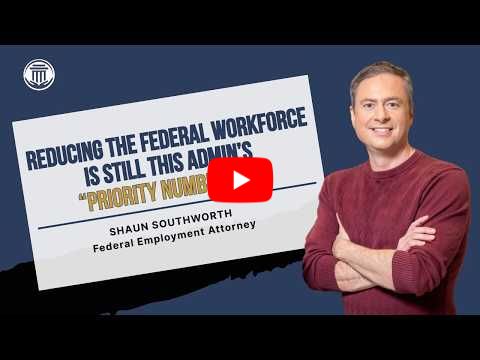
Lawsuit Challenges Schedule Policy/Career Rule
|

Need Help with Discipline or Performance?
If you’ve just been put on a PIP, received a proposed suspension or removal, or are worried your “coaching” has turned into a paper trail, it’s time to get real advice—not just hallway rumors.
At Southworth PC, we represent federal employees nationwide in:
-
Proposed discipline and removals
-
Performance issues and PIPs
-
EEO discrimination, harassment, and retaliation
-
Whistleblower and civil rights matters
-
MSPB, EEOC, and OSC cases
-
OPM/FERS disability retirement applications (flat‑fee full‑service assistance)
In a free, confidential consultation, you speak directly with an attorney about your timeline, key documents, and options. Deadlines can be quick in the federal sector, so if you have a deadline, don’t wait.
👉 Schedule Your Free Consultation Today
|

Disclaimer:
This briefing is for general informational purposes only and does not constitute legal advice or create an attorney‑client relationship. Federal employment law is fact‑specific and time‑sensitive; you should consult a qualified attorney about your own situation and deadlines. Past results do not guarantee future outcomes.
Your service is worth protecting. Let's protect it together at Southworth PC.

Responses