Attorneys for Federal Employees — Nationwide
Nearly 200,000 federal workers and supporters follow our updates across TikTok, Instagram, YouTube, Facebook, and LinkedIn. Each briefing gives you the three stories that actually matter to your job, plain‑English legal guidance, and one short practice to protect your peace of mind. If it helps you, forward it to a colleague—new readers can subscribe at https://fedlegalhelp.com/newsletter.
Today at a Glance
- Article II Firings: Two judges said some fired federal employees may go straight to federal court instead of MSPB.
- Federal Hiring: A lawsuit claims federal job applicants are being pressured to answer a “loyalty question” despite OPM saying it is optional.
- DHS Shutdown: House delays may push DHS employees toward another missed paycheck in early May.
Top Stories:
1. Fired Under Article II? Federal Court May Be Open
Source: Government Executive — April 29, 2026
TL;DR: Two federal judges ruled that employees fired under an “Article II” theory may challenge those removals directly in federal court. The latest ruling involved former DOJ attorney Maurene Comey. The judges have not yet decided whether the firings were unlawful. The issue is whether agencies can bypass normal civil service removal rules.
For federal employees, this means:
- Save your removal notice and any wording that says “Article II.”
- Do not assume MSPB is the only forum.
- Get legal advice quickly before choosing where to file.
Legal Insight:
Most covered employees have removal rights under 5 U.S.C. § 7513, including notice, cause, and a chance to respond. MSPB appeal rights usually run through 5 U.S.C. § 7701. If an agency claims it acted outside the CSRA, forum choice may be case-specific and time-sensitive.
2. OPM “Loyalty Question” in Hiring Draws Legal Challenge
Source: Federal News Network — April 29, 2026
TL;DR: A court filing claims federal job applicants are being required to answer a controversial “loyalty question,” even though OPM has said it is optional. The question reportedly asks applicants to affirm support for administration policies. Plaintiffs argue the practice is misleading and may violate federal hiring rules. The issue is now part of ongoing litigation over federal hiring practices.
For federal employees, this means:
- Applicants may face pressure to answer political or policy-based questions.
- Refusing to answer could affect hiring outcomes in practice, even if labeled optional.
- Current employees applying for internal jobs should document any irregular hiring practices.
Legal Insight:
Federal hiring must follow merit system principles under 5 U.S.C. § 2301, which require selection based on ability, not political affiliation. Prohibited personnel practices under 5 U.S.C. § 2302(b)(1) bar discrimination based on political beliefs. If applicants are penalized for how they answer, that could trigger OSC complaints or litigation.
3. DHS Funding Stalls as Pay Risk Returns
Source: Government Executive — April 28, 2026
TL;DR: House Republicans are seeking changes to a Senate-passed DHS funding bill. That delay could prolong the DHS shutdown and raise the risk of another missed paycheck. TSA and FEMA workers were specifically named as at risk. DHS officials said emergency pay funds may run out in the first week of May.
For federal employees, this means:
- DHS employees should prepare for another pay disruption.
- Keep copies of time records, furlough notices, and pay statements.
- Do not work during furlough unless formally designated excepted.
Legal Insight:
The Antideficiency Act, 31 U.S.C. § 1341, limits work and spending during a lapse in appropriations. The Government Employee Fair Treatment Act, 31 U.S.C. § 1341(c)(2), generally requires back pay after the lapse ends. Employees should follow written agency status notices and challenge incorrect pay records promptly.
Mindful Moment of the Day
Waiting on Approvals Without Losing Your Mind
Federal life often means watching your work sit in someone else’s queue for days or weeks. When you catch yourself checking the status for the tenth time, pause, feel your feet on the floor, and take five slow breaths while you say, “It’s in their court right now.” Then deliberately shift your attention to a task that is fully in your control, even if it’s small, and give it your full focus for the next 20 minutes. That way your peace is tied less to other people’s response times and more to the progress you can actually make today.
In Case You Missed It
A few quick hits from our recent videos and posts:
QSI Denied? What Federal Employees Should Know
|

Education OCR Layoffs and Civil Rights Backlog
|
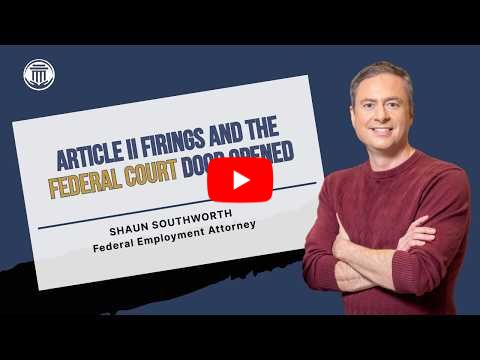
Article II Firings and Federal Court Rights
|
Worried About Retaliation or Being Targeted for Speaking Up?
If you’ve reported misconduct, safety concerns, discrimination, or waste/fraud/abuse—and now you’re seeing sudden schedule changes, bad performance reviews, or threats of discipline—you may be in whistleblower or retaliation territory.
We represent federal employees who:
-
Reported concerns and then saw adverse actions
-
Were sidelined, reassigned, or given impossible workloads after speaking up
-
Face investigations, PIPs, or proposed removals that look like payback
-
Need help navigating OSC complaints, EEO claims, or MSPB appeals tied to retaliation
A free, confidential consultation can help you sort out what’s normal agency behavior and what may cross the line—and what to do before your options narrow.
👉 Schedule Your Free Consultation Today
|

Disclaimer:
This briefing is for general informational purposes only and does not constitute legal advice or create an attorney‑client relationship. Federal employment law is fact‑specific and time‑sensitive; you should consult a qualified attorney about your own situation and deadlines. Past results do not guarantee future outcomes.
Your service is worth protecting. Let's protect it together at Southworth PC.

Responses