Attorneys for Federal Employees — Nationwide
Nearly 200,000 federal workers and supporters follow our updates across TikTok, Instagram, YouTube, Facebook, and LinkedIn. Each briefing gives you the three stories that actually matter to your job, plain‑English legal guidance, and one short practice to protect your peace of mind. If it helps you, forward it to a colleague—new readers can subscribe at https://fedlegalhelp.com/newsletter.
Today at a Glance
- FEMA layoffs paused for some CORE staff: A temporary pause may not mean the risk is gone—watch for updated notices.
- Congress funding deadline (Jan. 30): Your agency’s operating status could change fast—confirm guidance in writing.
- Treasury cancels Booz Allen contracts: Expect tighter data access and contractor rules—document instructions and stay compliant.
Top Stories:
1. FEMA Pauses Some Layoffs While Reform Council Continues
Source: Government Executive — January 26, 2026
TL;DR: FEMA paused certain workforce reductions for some CORE employees during a major winter storm. A separate FEMA Review Council was extended and is still working on longer-term changes.
For federal employees, this means:
- If you’re FEMA CORE (or in a related area), you may see delays or changes to layoff timelines.
A pause is not the same as cancellation—future restructuring may still be coming.
You should expect updated written notices and shifting dates.
Legal Insight:
Workforce reduction actions can move quickly, and your rights can depend on your appointment type (career, term, CORE/excepted, etc.) and what action the agency is actually taking (RIF, non-renewal, reassignment, or something else). Save every written notice and ask HR—in writing—what authority the agency is using and what options you have (grievance, appeal, or other). If you’re in a union, check your contract for notice and challenge rights. Because deadlines can be short, consider talking with your union and a qualified federal employment attorney.
2. Congress Shifts Focus to the Senate with a Jan. 30 Funding Deadline
Source: Federal News Network — January 26, 2026
TL;DR: The House finished its spending bills. The Senate is now the focus as Congress tries to avoid a funding lapse ahead of January 30.
For federal employees, this means:
- Your agency could issue instructions soon about furloughs, “excepted” work, travel, and contracting.
- If you’re in a role often “excepted” during lapses, confirm your duty status and timekeeping rules in writing.
- Pay and operations can become uncertain quickly—watch official agency emails and intranet updates.
Legal Insight:
When a funding deadline is near, agencies often release guidance on who must work, who is furloughed, and how time and attendance must be coded. Keep copies of all contingency-plan instructions and take screenshots of timekeeping guidance (errors can create later pay problems). If you are told to work, ask your supervisor to confirm your status by email and save it. Because deadlines can be short, consider talking with your union and a qualified federal employment attorney if you receive a furlough notice, an abrupt schedule change, or discipline tied to attendance during a funding disruption.
3. Treasury Cancels Booz Allen Contracts After Tax Data Breach Concerns
Source: Federal News Network — January 26, 2026
TL;DR: Treasury canceled its contracts with Booz Allen, citing concerns about protecting sensitive tax data after an IRS-related breach involving a former contractor.
For federal employees, this means:
- Agencies may tighten contractor access and increase documentation requirements.
- may see changes in who can access certain systems and how work is divided between staff and contractors.
- If you handle sensitive data, expect more controls, approvals, and audits.
Legal Insight:
Data access and protection rules are governed by agency policy and federal information security requirements, and agencies may respond quickly after high-profile incidents. Follow “need-to-know,” do not share credentials, and document approvals for data transfers or access changes. If someone pressures you to bypass controls “to meet deadlines,” ask for the instruction in writing and raise concerns through proper channels (supervisor, security office, or IG hotline) consistent with policy. Because investigations and discipline timelines can move fast, consider talking with your union and a qualified federal employment attorney if you’re placed under investigation or ordered to do something you believe violates policy.
Mindful Moment of the Day
Elevator Breaths Between Floors
When you ride the elevator between floors for meetings or errands, you can use those few seconds as a quick reset instead of scrolling your phone. As the doors close, gently relax your shoulders and take one slow breath for each floor you pass. Notice the feeling of your feet on the ground and the slight movement of the car. By the time the doors open, you’ve arrived not just physically at the next meeting, but mentally too.
In Case You Missed It
A few quick hits from our recent videos and posts:
January 30 Shutdown Risk: What Federal Employees Should Know
|

When a Federal Employee Is Labeled Before the Facts
|
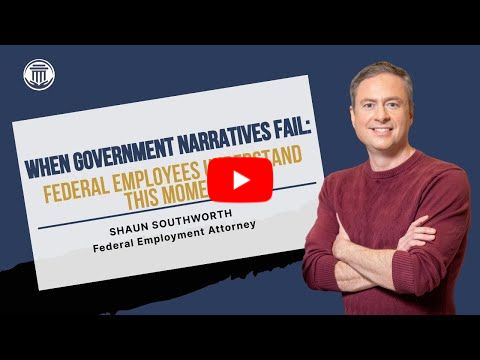
Why Federal Employees Feel on Edge—and How to Regain Clarity
|

Facing Harassment or Discrimination?
If you’re dealing with slurs, exclusion, hostile emails, or sudden negative treatment after speaking up, you don’t have to wait until things get unbearable to explore your options.
We regularly represent federal employees in:
-
EEO complaints for discrimination, harassment, and hostile work environment
-
Retaliation for prior EEO activity or protected conduct
-
Reasonable accommodation disputes
-
Related discipline or performance issues that follow on the heels of complaints
In your free, confidential consultation, we’ll walk through what’s been happening, key dates (including the short EEO deadlines), and the tools available to you—formal and informal.
👉 Schedule Your Free Consultation Today
|

Disclaimer:
This briefing is for general informational purposes only and does not constitute legal advice or create an attorney‑client relationship. Federal employment law is fact‑specific and time‑sensitive; you should consult a qualified attorney about your own situation and deadlines. Past results do not guarantee future outcomes.
Your service is worth protecting. Let's protect it together at Southworth PC.

Responses