Attorneys for Federal Employees — Nationwide
Nearly 200,000 federal workers and supporters follow our updates across TikTok, Instagram, YouTube, Facebook, and LinkedIn. Each briefing gives you the three stories that actually matter to your job, plain‑English legal guidance, and one short practice to protect your peace of mind. If it helps you, forward it to a colleague—new readers can subscribe at https://fedlegalhelp.com/newsletter.
Today at a Glance
-
Shutdown recovery and back pay — New funding law and OPM guidance drive back pay, leave fixes, and RIF reversals.
-
Schedule F records fight – NTEU sues OPM to force disclosure of which jobs agencies want to move into an at‑will category.
-
Union rights restoration push – A bipartisan discharge petition hits 218 signatures to force a vote on restoring collective bargaining rights to over 1 million feds.
Top Stories:
1. What It Really Takes to Reopen After a 43‑Day Shutdown
Source: Federal News Network — November 17, 2025
TL;DR: An in‑depth Federal News Network interview walks through what agencies and HR offices must do to restart operations after the record 43‑day shutdown. The continuing resolution that reopened government and new OPM guidance require agencies to quickly process back pay, reverse shutdown‑related RIFs, and tackle significant retirement and workload backlogs.
For federal employees, this means:
- You should closely check your upcoming pay statements to confirm you received full back pay for the shutdown period.
- Review your leave balances — especially “use‑or‑lose” annual leave — to ensure furloughed time is treated correctly and key dates (like the November 29, 2025 scheduling deadline) are on your calendar.
- If you were affected by a shutdown‑related RIF, watch for written notice that it is being rescinded under the new law.
Legal Insight:
The main authorities here are the new continuing appropriations law that reopened the government, a 2019 statute guaranteeing retroactive pay after shutdowns, and OPM’s post‑shutdown guidance on pay, leave, and RIF rescissions. Under that framework, most furloughed and excepted employees must receive back pay at their normal rate, while those already in another non‑pay status or marked AWOL for certain hours may not be covered. OPM also instructs agencies to treat furloughed time as if it were in pay status for leave accrual, to correct leave records retroactively, and to notify employees within a few days when a shutdown‑related RIF is undone. Practically, you can protect yourself by downloading pre‑ and post‑shutdown earnings and leave statements, comparing them line by line, saving any RIF or rescission notices, and calendaring important dates for pay claims and internal grievance or appeal processes. If your pay, status, or leave still look wrong after you raise concerns in writing, it may be worth talking with your union and a qualified federal employment attorney, because deadlines can be short.
2. NTEU Sues OPM for Schedule F (Schedule Policy/Career) Records
Source: Government Executive — November 17, 2025
TL;DR: Government Executive reports that the National Treasury Employees Union has filed a federal lawsuit claiming OPM failed to respond to an August 20 FOIA request for records on positions agencies want to move into the revived “Schedule Policy/Career” (formerly Schedule F) category. The suit argues that OPM missed FOIA’s response deadline and asks a D.C. federal court to order release of all agency petitions so unions and employees can see which jobs are being targeted.
For federal employees, this means:
- There is still no public master list of positions agencies want to shift into this at‑will category.
- If NTEU succeeds, employees in policy, analysis, and other “policy‑influencing” roles may finally be able to see if their positions are on the list.
- Even before anything changes, it’s wise to pay attention to agency communications about classification and job status.
Legal Insight:
This case relies on the Freedom of Information Act, which generally requires agencies to respond to records requests within 20 working days (or 30 in unusual cases) and allows requesters to sue in federal court if the agency does not respond. Underlying the dispute are Executive Orders 13957 and 14171, OPM’s Schedule Policy/Career guidance, and a proposed OPM rule that would move tens of thousands of policy‑influencing positions into this category. For you, the practical step is to watch for union updates, keep copies of any notices or emails hinting that your position might be reclassified, and monitor OPM and your agency’s HR or CHCO communications about Schedule Policy/Career. If you receive a notice changing your status or appeal rights, save every document, ask HR your questions in writing, and calendar any deadlines tied to grievances, EEO complaints, or MSPB appeals. Because the interaction between this category and existing civil service protections is complex and deadlines can be short, consider speaking with your union and a qualified federal employment attorney if your position or rights appear to be changing.
3. House Discharge Petition Reaches 218 Signatures to Restore Union Rights
Source: Office of Rep. Mike Lawler — November 17, 2025
TL;DR: Rep. Mike Lawler announced that his signature was the 218th on House Discharge Petition 6, forcing the House to bring H.R. 2550, the Protect America’s Workforce Act, up for a vote. The bill would overturn an earlier Trump‑era executive order that excluded large parts of the federal workforce from collective bargaining coverage and, according to AFGE, could restore union rights to more than 1 million federal employees.
For federal employees, this means:
- If you work in an agency or subdivision that recently lost union representation under the “Exclusions from Federal Labor‑Management Relations Programs” order, there is now a realistic path for Congress to restore your bargaining rights.
- Nothing has changed yet in your day‑to‑day rights until H.R. 2550 passes both chambers and is signed into law.
- This is a key moment to organize your paperwork and stay in close touch with your union about next steps.
Legal Insight:
H.R. 2550, the Protect America’s Workforce Act, would nullify Executive Order 14251, “Exclusions from Federal Labor‑Management Relations Programs,” and restore full coverage of the federal labor‑management statute (Title 5, Chapter 71) to affected agencies and subdivisions. Under OPM’s existing FAQ for EO 14251, agencies can terminate recognition of certain bargaining units, pause bargaining, halt dues allotments, and deny union representation in formal discussions and investigatory meetings for excluded employees. In the meantime, it is important to keep copies of any notices about changes to your bargaining‑unit status, communications about dues allotments, and any grievances or RFIs that were put “on hold” because of the exclusions order. If H.R. 2550 becomes law, that documentation may be critical for deciding what issues can be revisited through bargaining, grievances, or unfair labor practice charges. As always, deadlines for grievances and other challenges can be tight, so consider staying closely coordinated with your union and, where needed, a federal employment attorney.
Mindful Moment of the Day
Hostile or unfair environments take a real toll, especially if you’re dealing with harassment, discrimination, or a supervisor who seems to single you out. A few small habits can help you stay grounded while you decide how to respond:
- After a tough email or meeting, pause before replying — step away for five minutes, breathe, and then draft your response.
- Keep a simple log of incidents (date, time, who was present, what was said or done) so you’re not relying on memory when you talk to EEO, your union, or counsel.
- Build a brief end‑of‑day ritual — even two minutes — to mentally “leave work at work,” whether that’s a walk, a stretch, or writing down what you want to address tomorrow.
- Remind yourself that documenting and protecting your rights is not overreacting; it’s taking care of your future self.
You don’t have to handle a hostile environment alone, and you’re allowed to prioritize your mental health while you protect your career.
In Case You Missed It
A few quick hits from our recent videos and posts:
Shutdown Aftermath: What Federal Employees Need to Know Now
|

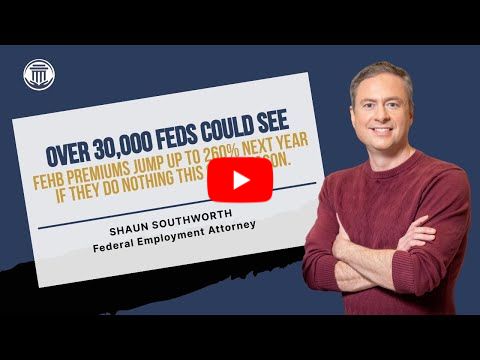
Avoid Costly FEHB Surprises: Open Season 2026 Changes You Must Check
|
DHS’s $220M Border Ads: What Federal Employees Need to Know
|

Facing Harassment or Discrimination?
If you’re dealing with slurs, exclusion, hostile emails, or sudden negative treatment after speaking up, you don’t have to wait until things get unbearable to explore your options.
We regularly represent federal employees in:
-
EEO complaints for discrimination, harassment, and hostile work environment
-
Retaliation for prior EEO activity or protected conduct
-
Reasonable accommodation disputes
-
Related discipline or performance issues that follow on the heels of complaints
In your free, confidential consultation, we’ll walk through what’s been happening, key dates (including the short EEO deadlines), and the tools available to you—formal and informal.
👉 Schedule Your Free Consultation Today
|

Disclaimer:
This briefing is for general informational purposes only and does not constitute legal advice or create an attorney‑client relationship. Federal employment law is fact‑specific and time‑sensitive; you should consult a qualified attorney about your own situation and deadlines. Past results do not guarantee future outcomes.
Your service is worth protecting. Let's protect it together at Southworth PC.

Responses