Attorneys for Federal Employees — Nationwide
Nearly 200,000 federal workers and supporters follow our updates across TikTok, Instagram, YouTube, Facebook, and LinkedIn. Each briefing gives you the three stories that actually matter to your job, plain‑English legal guidance, and one short practice to protect your peace of mind. If it helps you, forward it to a colleague—new readers can subscribe at https://fedlegalhelp.com/newsletter.
Today at a Glance
-
House Oversight markup: Bills targeting probationary periods, union official time, and supervisor training move forward.
-
HHS accommodation delays: Months‑long backlog and tighter telework policies raise the stakes for documenting disability and religious accommodations.
-
DoD wage grade retro pay: Long‑delayed 2024 raises finally moving for FWS workers — with retroactive pay to monitor closely.
Top Stories:
1. House Oversight Takes Up Three Major Civil Service Bills
Source: Federal News Network — December 1, 2025
TL;DR: The House Oversight Committee is marking up three bills that would lengthen probationary periods, require certification to keep new hires, increase reporting on union “official time,” and mandate stronger supervisor training on performance and employee rights. None are law yet, but this is an early step toward House passage.
For federal employees, this means:
- Probation for many new hires could extend to two years, with agencies required to “certify” you for retention — or terminate you.
- Union representatives could face more detailed, public reporting on how much official time they use, for what, and at what cost.
- Supervisors may be required to complete more robust training on performance management, discipline, prohibited personnel practices, and employee rights.
- Other parts of the markup could affect relocation payments and incentives, depending on what the final bills include.
Legal Insight:
These proposals would amend Title 5 rules that control how long you stay in probationary status, how official time is tracked, and how supervisors are trained to handle performance, discipline, and harassment. Even though these bills are not law yet, a full committee markup is the first real step toward passage, so it’s worth watching what amendments are adopted and how the final text looks. If the EQUALS Act advances, assume a longer trial period with fewer MSPB appeal rights and start documenting performance feedback, emails, and any troubling incidents from day one. Unionized employees may see increased scrutiny on official time, so keeping accurate records of representational work will matter more. Because deadlines and appeal rules around removals, probationary terminations, and whistleblower issues can be very short, consider talking with your union and a qualified federal employment attorney if you get any notice suggesting your status might change.
2. HHS Reasonable Accommodation Backlog and New Telework‑Related Policies
Source: Federal News Network — December 1, 2025
TL;DR: HHS expects it will take six to eight months to clear a backlog of reasonable accommodation requests, while the department and some components are tightening telework and in‑office requirements against a backdrop of broader administration pressure to roll back remote work.
For federal employees, this means:
- HHS staff — and potentially employees at other agencies following similar models — may experience significant delays in getting reasonable accommodation (RA) decisions.
- Requests for telework as an accommodation may be harder to secure or slower to approve, even as in‑office expectations increase.
- Documenting requests, follow‑ups, and any harm caused by delays is becoming more critical to protect your rights under the Rehabilitation Act and Title VII.
Legal Insight:
For federal employees, RA rights primarily come from the Rehabilitation Act of 1973 and, for religious accommodations, Title VII of the Civil Rights Act, as implemented by OPM and your agency’s policies. Agencies must engage in an “interactive process” and act within a reasonable time, even though the statutes don’t set a hard deadline. You may want to put RA requests in writing, keep copies of all forms and emails, and track dates when you submit medical documentation or request telework as an accommodation. If delays drag on, consider escalating politely in writing to the RA coordinator, your EEO office, or another designated official, and review any union contract language on timelines. Because EEO deadlines for disability and religious‑accommodation claims can be very short — often 45 days from when you knew about the alleged discrimination — it can be important to talk with your union and a qualified federal employment attorney if an RA is denied or stalled in a way that harms your health, pay, or career.
3. Retroactive 2024 Pay Raises Finally Moving for DoD Wage Grade Employees
Source: AFGE — December 1, 2025
TL;DR: After long delays, the DoD Wage Committee has approved updated 2024 wage schedules for more than 118,000 wage grade employees, clearing the way for retroactive pay raises — though full payment may not show up until as late as January 2026.
For federal employees, this means:
- DoD Federal Wage System (FWS) workers should eventually receive retroactive pay back to when 2024 raises should have taken effect.
- The delays appear tied to an earlier decision to pause advisory committees, which kept the Wage Committee from acting sooner.
- It is essential to monitor your leave and earnings statements (LES) for when the new rates and back pay actually hit.
Legal Insight:
Pay for FWS employees is set under Title 5 and OPM regulations, but the DoD Wage Committee must approve wage schedules before they can be implemented. When a pay adjustment is delayed and then applied retroactively, employees may have potential claims under the Back Pay Act or through negotiated grievance procedures if they are not paid correctly or in full. Wage grade employees may want to keep copies of pay stubs from the affected period, note when the new rates appear, and compare their hourly rates to the official wage tables for their area and grade. If something looks off, raising the issue in writing with HR, payroll, and your union can help create a record and start the correction process. Because deadlines for pay grievances and some statutory claims can be short, consider speaking with your union and a qualified federal employment attorney if you believe you’ve been underpaid or left out of a retroactive adjustment.
Mindful Moment of the Day
When the Workplace Feels Hostile or Unfair
Harassment, discrimination, or a chronically hostile environment can wear you down long before any formal action is taken. A few grounding steps can help you get through the day while you decide what to do next:
- Pause before you respond. After a bad meeting or comment, take 2–3 minutes away from your screen before sending any email or Teams message.
- Write, don’t send (yet). If you’re upset, draft what you want to say in a separate document. Save it, step away, and revisit it later with a cooler head.
- Capture facts, not just feelings. When something troubling happens, jot down the date, time, place, who was present, and the exact words or actions — this helps both your memory and any future report.
- Check in with your body. Notice if your shoulders are tight, jaw clenched, or breathing shallow. Taking even five slow breaths can interrupt the stress spike.
- Reach for support. Whether it’s a trusted colleague, union rep, EEO counselor, or mental health professional, you don’t have to process everything alone.
You don’t have to decide today whether to file an EEO complaint or grievance — but calming your nervous system and documenting what happens gives you more options later.
In Case You Missed It
A few quick hits from our recent videos and posts:
Public Support for Federal Workers Amid Agency Cuts
|

Kalkines Warnings After Shows v. Treasury: What Feds Must Know
|

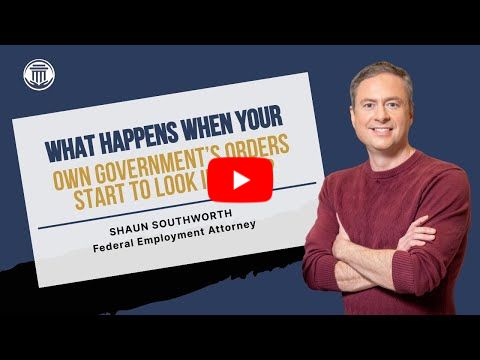
Unlawful Orders in Federal Service: What You Need to Know
|
Facing Harassment or Discrimination?
If you’re dealing with slurs, exclusion, hostile emails, or sudden negative treatment after speaking up, you don’t have to wait until things get unbearable to explore your options.
We regularly represent federal employees in:
-
EEO complaints for discrimination, harassment, and hostile work environment
-
Retaliation for prior EEO activity or protected conduct
-
Reasonable accommodation disputes
-
Related discipline or performance issues that follow on the heels of complaints
In your free, confidential consultation, we’ll walk through what’s been happening, key dates (including the short EEO deadlines), and the tools available to you—formal and informal.
👉 Schedule Your Free Consultation Today
|

Disclaimer:
This briefing is for general informational purposes only and does not constitute legal advice or create an attorney‑client relationship. Federal employment law is fact‑specific and time‑sensitive; you should consult a qualified attorney about your own situation and deadlines. Past results do not guarantee future outcomes.
Your service is worth protecting. Let's protect it together at Southworth PC.

Responses