Attorneys for Federal Employees — Nationwide
Nearly 200,000 federal workers and supporters follow our updates across TikTok, Instagram, YouTube, Facebook, and LinkedIn. Each briefing gives you the three stories that actually matter to your job, plain‑English legal guidance, and one short practice to protect your peace of mind. If it helps you, forward it to a colleague—new readers can subscribe at https://fedlegalhelp.com/newsletter.
Today at a Glance
-
MSPB Due Process: New reporting shows board member recusals are blocking nearly 40% of federal employee appeals at the Merit Systems Protection Board, leaving administrative-judge rulings standing without merits review.
-
House Oversight Targets Settlements: House Oversight Chair James Comer has given OPM until May 25 to produce six years of federal-employee settlement data, framing settlements as the result of "frivolous claims" — a characterization federal employment attorneys dispute.
-
Tax Delinquency Audit: A new Treasury Inspector General audit finds federal-employee tax delinquencies rose 45% since 2021, and the IRS has resumed levies and begun referring employees who are eight or more years behind to its Criminal Investigations division.
Top Stories:
1. MSPB Recusals Are Blocking Nearly 40% of Federal Employee Appeals
Source: FedSmith, May 12, 2026
TL;DR: The Merit Systems Protection Board (MSPB — the independent agency that hears federal-employee appeals from adverse actions, performance-based removals, and similar personnel actions) is unable to act in nearly 40% of petitions for review because one of its two sitting members has recused. Acting Chair Henry Kerner has accounted for more than 100 recusals, generally in cases involving the Office of Special Counsel (OSC) where he previously served. Member James Woodruff has accounted for roughly 30 recusals, generally in matters involving the Department of Defense and the Department of Veterans Affairs, where he previously worked. As of April 9, 2026, one member had abstained more than 140 times since the Board regained a two-member quorum in late 2025. Without a quorum, the Board cannot grant or decide a petition for review, and the administrative judge's initial decision becomes final by operation of law. Between September 2025 and May 2026, MSPB has received nearly 4,500 appeals despite the October 2025 to November 2025 partial shutdown, and Board staffing has fallen from 214 full-time employees in 2018 to 174 in June 2025.
For federal employees, this means:
-
If your case is at the petition-for-review stage and the agency involved is OSC, DoD, or VA, the likelihood that the Board cannot reach a merits decision is materially higher; the practical consequence is that the administrative judge's initial decision will become the final agency action.
-
Initial decisions are still the place to win or lose your case. Build the strongest record possible in front of the administrative judge — exhibits, declarations, cross-examination — because petition-for-review relief from the Board may not be available in your matter.
- Track the deadlines. A petition for review must generally be filed within 35 days of the initial decision under 5 C.F.R. § 1201.114; a final Board order (including one that becomes final by operation of law) starts the 60-day window to seek review in the Federal Circuit under 5 U.S.C. § 7703(b)(1).
Legal Insight:
The Board's authority and powers are set out at 5 U.S.C. §§ 1201–1204, and PFR procedures appear at 5 C.F.R. Part 1201, Subpart C. When the Board lacks a quorum to act on a PFR, the underlying initial decision stands and becomes the final action subject to judicial review under 5 U.S.C. § 7703 — meaning the record made before the administrative judge controls. Federal employees with pending or imminent adverse actions, performance-based removals, or other Board-appealable matters should consult a federal employment attorney early enough to build that record, not after a PFR is filed.
2. House Oversight Chair Sets May 25 Deadline for OPM Settlement Data, Calls Federal-Employee Settlements "Frivolous"
Source: Federal News Network, May 12, 2026
TL;DR: House Oversight and Government Reform Committee Chair James Comer (R-Ky.) sent a letter dated May 11, 2026 to OPM Director Scott Kupor demanding data on federal-employee workplace disputes and settlements going back to January 2020, with a May 25 deadline. Comer's letter argues that agencies have an "excessive reliance" on settlement rather than litigation and points to MSPB data from fiscal 2005 to fiscal 2015 showing 68% of federal-employee cases reached settlement, and EEOC data showing the federal government paid roughly $202 million in mediation and settlement awards in fiscal 2023, compared with about $22.6 million through litigation judgments. The letter requests total case counts, settlement costs, ADR (alternative dispute resolution) data, and trend information. Federal employment attorneys quoted in the reporting said the framing mischaracterizes how and why agencies settle, noting that settlement decisions are made on case-by-case risk assessments and not because agencies are biased toward paying out claims.
For federal employees, this means:
-
If you have an EEO complaint, MSPB appeal, OSC complaint, or grievance heading toward settlement discussions, document everything in writing through your representative or counsel; OPM data calls can later turn into policy that changes how and whether your agency settles.
-
Settlement remains a lawful, recognized resolution tool under multiple federal-sector procedures — EEO under 29 C.F.R. § 1614.603, MSPB under 5 C.F.R. § 1201.41(c), and OSC under 5 U.S.C. § 1214. Nothing in the letter changes the legal availability of settlement; the letter is a data request, not a directive.
-
Watch for follow-on guidance. If OPM responds with policy or guidance limiting settlement authority or imposing approval layers, that could affect the timing and value of pending matters.
Legal Insight:
Federal-sector dispute resolution operates under the Administrative Dispute Resolution Act, 5 U.S.C. §§ 571–584, which authorizes agencies to use ADR and settlement to resolve workplace disputes, and under the procedural rules cited above governing EEO, MSPB, and OSC matters. Settlement is also frequently the most efficient way to resolve discrimination and prohibited-personnel-practice cases under 5 U.S.C. § 2302 and Title VII of the Civil Rights Act, 42 U.S.C. § 2000e-16. A congressional data request does not change those legal authorities, but it can shape how OPM advises agencies going forward.
3. TIGTA: Federal Employee Tax Delinquencies Up 45% Since 2021; IRS Resumes Levies and Criminal Referrals
Source: Government Executive, May 11, 2026
TL;DR: The Treasury Inspector General for Tax Administration (TIGTA) found in a new audit that approximately 215,000 federal employees were delinquent on their federal taxes as of fiscal year 2024, owing $2.1 billion — a 45% increase in the number of delinquent employees since 2021 and a roughly $600 million increase in unpaid balances. The delinquency rate for current federal civilian employees rose from 4.9% in FY 2021 to 6.9% in FY 2024. Combined with retirees, approximately 572,000 federal employees and retirees owed about $6.3 billion. The Treasury Department's own employee delinquency rate is 2.4%, because Treasury is statutorily authorized to review its employees' tax compliance. The IRS attributes part of the increase to pandemic-era collection pauses and began a phased resumption of the levy program in August 2024. Of approximately 427,000 notices the IRS mailed to delinquent federal employees and retirees in 2025, nearly 65,000 made at least some payment. TIGTA reported that 122 federal workers eight or more years delinquent were referred to IRS Criminal Investigations.
For federal employees, this means:
-
If you have unfiled returns or unpaid federal tax, do not wait. The IRS has resumed levies, is prioritizing federal-employee collection more frequently, and is referring the most delinquent employees for criminal investigation under 26 U.S.C. § 7203 (willful failure to file) and § 7201 (tax evasion).
-
Federal employees are independently obligated under 5 C.F.R. § 735.207 to pay their just financial obligations, including federal, state, and local taxes, in a proper and timely manner. Tax noncompliance can be the basis for an adverse action even where the underlying tax issue is being resolved.
-
If you receive an IRS LT36 notice or other delinquency contact, respond promptly — IRS installment agreements, currently-not-collectible status, and offers in compromise under 26 U.S.C. § 7122 remain available and generally pause levy action while applications are pending.
Legal Insight:
Federal-employee tax obligations are governed by the Internal Revenue Code, with disclosure restrictions on IRS data set out at 26 U.S.C. § 6103, which generally prohibits IRS from sharing employee-specific tax delinquency information with the employee's agency. The conduct obligation runs separately: 5 C.F.R. § 735.207 requires federal employees to pay just financial obligations in a proper and timely manner, and tax noncompliance has supported removal and lesser discipline in MSPB case law. An employee facing IRS collection activity, criminal referral, or an agency proposal premised on tax noncompliance should consult a federal employment attorney and a qualified tax practitioner promptly, because the procedural windows are short and the two tracks (IRS resolution and agency adverse-action defense) usually need to move in parallel.
Legal Tip of the Day
If You’re Asked to Sign Something You Don’t Fully Understand
Documents may be presented quickly, sometimes with pressure to sign. These can include acknowledgments, agreements, or statements. Take time to read carefully and ask questions. Signing does not always mean agreement, but it can still carry consequences. It is reasonable to request time before signing.
In Case You Missed It
A few quick hits from our recent videos and posts:
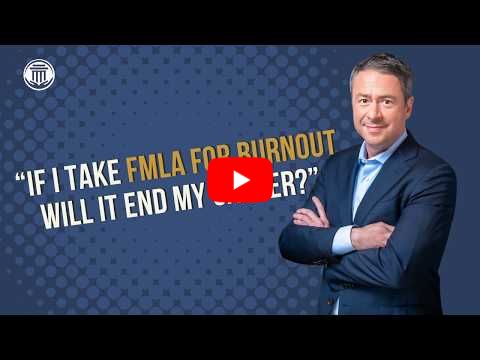
FMLA for Federal Employee Burnout
|
Federal EEO and MSPB Settlements Under Scrutiny
|

Federal Tax Debt and Your Federal Job
|

Thinking About Federal Disability Retirement?
If your medical conditions make it hard to safely or consistently perform your federal job—even with accommodations—it may be time to explore OPM/FERS disability retirement.
We help federal employees:
-
Decide whether disability retirement is the right path compared to accommodation or reassignment
-
Gather and frame medical evidence so it speaks the language OPM expects
-
Prepare and submit disability retirement applications and related documentation
-
Coordinate strategy when disability retirement interacts with pending discipline, EEO complaints, or MSPB appeals
For most disability retirement matters, we offer full‑service application assistance for a flat fee of $5,000, plus any required costs. In a free consultation, we’ll talk through your health limitations, job duties, and timelines so you understand your options before you commit.
👉 Schedule Your Free Consultation Today
|

Disclaimer:
This briefing is for general informational purposes only and does not constitute legal advice or create an attorney‑client relationship. Federal employment law is fact‑specific and time‑sensitive; you should consult a qualified attorney about your own situation and deadlines. Past results do not guarantee future outcomes.
Your service is worth protecting. Let's protect it together at Southworth PC.

Responses