Attorneys for Federal Employees — Nationwide
Nearly 200,000 federal workers and supporters follow our updates across TikTok, Instagram, YouTube, Facebook, and LinkedIn. Each briefing gives you the three stories that actually matter to your job, plain‑English legal guidance, and one short practice to protect your peace of mind. If it helps you, forward it to a colleague—new readers can subscribe at https://fedlegalhelp.com/newsletter.
Today at a Glance
-
Union challenges post‑shutdown layoffs: Lawsuit claims agencies broke a new law that freezes shutdown‑related RIFs.
-
OPM plans one HR system for all agencies: A major IT overhaul could affect how your records, pay, and performance are tracked.
-
IRS closes hardship telework requests: Agency is wiping out many hardship telework requests under a strict return‑to‑office policy.
Top Stories:
1. Unions Say Post‑Shutdown Layoffs Violate New RIF Freeze
Source: Bloomberg Law — December 9, 2025
TL;DR: Federal unions have gone to federal court to challenge layoffs at five agencies that happened after Congress passed a funding law reversing shutdown‑related RIFs and banning new RIFs through January 30, 2026. The unions say at least 500 employees were separated in violation of that law and are asking a judge to order agencies to reverse those actions.
For federal employees, this means:
- If you were hit with a shutdown‑related RIF or pressured into a “deferred resignation,” this lawsuit could affect your rights and options.
- The case tests how strictly agencies must follow Congress’s limits on layoffs after the shutdown.
- Even if you were not affected, the outcome will shape how agencies handle future RIFs and separation programs.
Legal Insight:
This dispute turns on the most recent government funding law, which temporarily bans most RIFs tied to the shutdown through January 30, 2026, and on the Civil Service Reform Act (CSRA), which usually forces employees to use MSPB and federal appeals courts for challenges. If you get a RIF or separation notice during a freeze, save the full notice, the envelope, and any emails or memos explaining why you are being separated. Ask in writing how the action fits with the new law and whether the agency has issued any special guidance. Check with your union to see if it is tracking your type of case or collecting names. Put all deadlines from the notice on your calendar and keep copies of your SF‑50s and pay records in a personal file. Because deadlines can be short, consider talking with your union and a qualified federal employment attorney.
2. OPM Moves Ahead with Single HR IT System for All Agencies
Source: Federal News Network — December 9, 2025
TL;DR: OPM says it plans to award a major contract by January to start merging more than 100 separate HR systems into one government‑wide platform, with full adoption aimed for September 2027. The system is supposed to handle personnel records, payroll, performance data, and workforce analytics for agencies, HR offices, and employees.
For federal employees, this means:
- Over the next few years, your HR self‑service tools, personnel files, and possibly time‑and‑attendance may move into a new, centralized system.
- You may see new log‑ins, portals, and processes as your agency transitions.
- There could be data glitches or missing records during the changeover, so your own copies will matter.
Legal Insight:
OPM is using its existing authority under the CSRA, government‑wide HR laws, and the President’s Management Agenda to drive this IT change; it does not, by itself, change your basic rights. But whenever HR systems change, errors are common. Now is a good time to download and save your key documents: SF‑50s, performance plans and ratings, awards, position descriptions, and leave records. When your agency announces a cutover, read all notices carefully, log in early, and report any errors in writing to HR. If you are in the middle of a grievance, EEO complaint, MSPB appeal, workers’ comp claim, or classification dispute, keep your own full copy of the case file in case electronic records move or are archived. If you see “lost” ratings or records right before a RIF or other action, talk with your union and consider speaking with a qualified federal employment attorney.
3. IRS Shuts Down Many Hardship Telework Requests
Source: Federal News Network — December 9, 2025
TL;DR: The IRS has told employees it is closing out pending hardship requests for full‑time telework, citing the Trump administration’s government‑wide return‑to‑office order. Under an internal memo, most IRS employees are limited to five telework days per calendar year, and new hardship requests must go through agency leadership or the human capital office.
For federal employees, this means:
- If you relied on hardship telework for serious medical issues, family crises, or safety concerns, your old request may be wiped out.
- You may have to file a new request through a stricter, slower process with higher‑level review.
- The IRS’s move, plus similar actions at agencies like HHS, signals tighter scrutiny of telework as a reasonable accommodation.
Legal Insight:
This shift sits at the intersection of the Rehabilitation Act (reasonable accommodation for disabilities), the government‑wide return‑to‑office policy, and the 2022 IRS–NTEU national agreement on hardship telework. If you have a disability or serious hardship and need telework, keep copies of your medical documentation, old approvals, emails, and any new denials or closure notices. Make new requests or appeals in writing, ask for a written explanation when telework is denied, and track how long the agency takes to respond. If you are in a bargaining unit, review your contract’s provisions on accommodation and telework and contact your union if long‑standing hardship telework is suddenly taken away. Because deadlines can be short for EEO complaints, union grievances, and MSPB or OSC filings—especially if denial leads to discipline or forced separation—consider talking with your union and a qualified federal employment attorney.
Legal Tip of the Day
When You’re Being Investigated
If you’re contacted by an investigator, internal affairs, OIG, or HR for an interview, pause before you rush in. Ask: Am I a witness or the subject? Is this administrative, criminal, or both? Do I have the right to a representative or union steward in this meeting? Request the topic and relevant documents in advance if possible, and avoid guessing or speculating in your answers. Never assume that “just cooperating” will protect you. These interviews can directly affect your job, pay, and clearance. If you’ve been told you’re under investigation, our firm can help you understand your rights before you speak.
In Case You Missed It
A few quick hits from our recent videos and posts:
Supreme Court Signals Shift on Independent Agencies
|

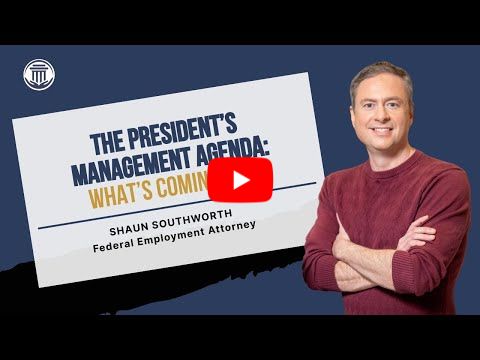
Federal Workers and the New Management Agenda: What It Really Signals
|
How the 2026 NDAA Draft Could Reshape DoD Civilian Careers
|

Thinking About Federal Disability Retirement?
If your medical conditions make it hard to safely or consistently perform your federal job—even with accommodations—it may be time to explore OPM/FERS disability retirement.
We help federal employees:
-
Decide whether disability retirement is the right path compared to accommodation or reassignment
-
Gather and frame medical evidence so it speaks the language OPM expects
-
Prepare and submit disability retirement applications and related documentation
-
Coordinate strategy when disability retirement interacts with pending discipline, EEO complaints, or MSPB appeals
For most disability retirement matters, we offer full‑service application assistance for a flat fee of $5,000, plus any required costs. In a free consultation, we’ll talk through your health limitations, job duties, and timelines so you understand your options before you commit.
👉 Schedule Your Free Consultation Today
|

Disclaimer:
This briefing is for general informational purposes only and does not constitute legal advice or create an attorney‑client relationship. Federal employment law is fact‑specific and time‑sensitive; you should consult a qualified attorney about your own situation and deadlines. Past results do not guarantee future outcomes.
Your service is worth protecting. Let's protect it together at Southworth PC.

Responses