Attorneys for Federal Employees — Nationwide
Nearly 200,000 federal workers and supporters follow our updates across TikTok, Instagram, YouTube, Facebook, and LinkedIn. Each briefing gives you the three stories that actually matter to your job, plain‑English legal guidance, and one short practice to protect your peace of mind. If it helps you, forward it to a colleague—new readers can subscribe at https://fedlegalhelp.com/newsletter.
Today at a Glance
- Union rights bill moves in the House: Could reshape bargaining coverage if it becomes law; no immediate changes yet.
- AI Talent Act introduced: Would aim to speed up technical hiring with shared assessments and pooled hiring tools.
- “Federal HR 2.0” memo released: Big plan to consolidate HR systems; watch for agency rollout instructions and record checks.
Top Stories:
1. House Passes Bill to Roll Back a March 27 Labor-Relations Executive Order (H.R. 2550)
Source: Government Executive — December 11, 2025
TL;DR: The House passed the Protect America’s Workforce Act (H.R. 2550), which would nullify a March 27, 2025 executive order that excluded certain employees from federal labor-management relations programs. The bill now moves to the Senate.
For federal employees, this means:
- Your day-to-day workplace rules usually don’t change until legislation is enacted and agencies issue implementing guidance.
- If the bill becomes law, union coverage and bargaining rights could expand back toward pre–March 27 rules.
- The bill says collective bargaining agreements in effect as of March 26, 2025 would remain in force through their stated term (if enacted).
Legal Insight:
For now, stick to your current agency policies and your current collective bargaining agreement. If you receive a notice that affects bargaining-unit status, official time, grievance steps, or workplace rules, save it and ask HR/labor relations (and your union) in writing what is changing and when. If the change affects your rights or requires a quick response, consider talking with your union and a qualified federal employment attorney.
2. “AI Talent Act” Would Modernize Hiring for AI and Other Technical Roles
Source: Nextgov/FCW — December 11, 2025
TL;DR: Lawmakers introduced the AI Talent Act to help the government recruit and hire AI talent using agency “talent teams” and a central team at OPM. The idea is to support pooled hiring, shared candidate lists, and shared technical assessments—if it passes.
For federal employees, this means:
- If the bill becomes law and is implemented, applicants may see more structured, skills-based assessments for AI/tech roles.
- Current employees who want to move into AI, data, or cybersecurity roles may see new hiring pathways over time—if agencies roll them out.
- HR/hiring teams should watch for OPM guidance that could standardize assessments or enable shared candidate pools.
Legal Insight:
This is proposed legislation, not a final rule you can rely on for immediate changes. If you apply for technical roles, keep copies of the job announcement, assessment instructions, and any results notices. If you believe something went wrong in an assessment or hiring step, raise the concern promptly and keep a clear record of who you contacted and what you were told. If a hiring dispute affects you and timelines are tight, consider talking with your union (if applicable) and a qualified federal employment attorney.
3. OMB/OPM Memo Outlines “Federal HR 2.0” and a Push to Consolidate Core HR Systems
Source: OMB/OPM Memorandum — December 10, 2025
TL;DR: OMB and OPM issued a governmentwide memo describing a plan to move toward a single Core HCM (core HR system of record) across the federal government. The memo sets a goal of governmentwide adoption by FY 2028 and describes implementation in two waves beginning in FY 2026 and FY 2027.
For federal employees, this means:
- Over time, you may see significant changes to HR self-service tools—such as personnel actions, position management, time and attendance, and learning systems.
- Your agency may issue a migration schedule, training requirements, and instructions on verifying your personnel and time records before cutovers.
- It’s wise to keep your own copies of key HR/pay records so you can spot and correct errors quickly if systems change.
Legal Insight:
Governmentwide management direction usually turns into day-to-day impact through agency implementation plans and written instructions. Protect yourself by keeping copies of SF-50s, performance plans, leave and earnings statements, time-and-attendance records, and leave balances. If you are told a change affects pay, leave, or timekeeping approvals, ask for the effective date and the written guidance you are expected to follow. If a system transition leads to a dispute with short timelines (for example, pay issues or adverse actions tied to timekeeping), consider talking with your union and a qualified federal employment attorney.
Legal Tip of the Day
Reasonable Accommodation and Medical Issues
If a medical condition affects your work, don’t struggle in silence. A reasonable accommodation request should be made in writing (even a simple email) explaining that you have a medical condition and need adjustments to perform your job. The agency may ask for medical documentation—keep copies of everything you submit. Propose practical solutions: schedule changes, telework, equipment, or reassignment if needed. The process is supposed to be interactive; you’re not required to accept the first thing offered if it doesn’t actually help. Because accommodation rules are technical and very fact-specific, our office can talk through your options before you agree to or decline a proposal.
In Case You Missed It
A few quick hits from our recent videos and posts:
IRS Ends Hardship Telework — What That Means for Your RA Rights
|

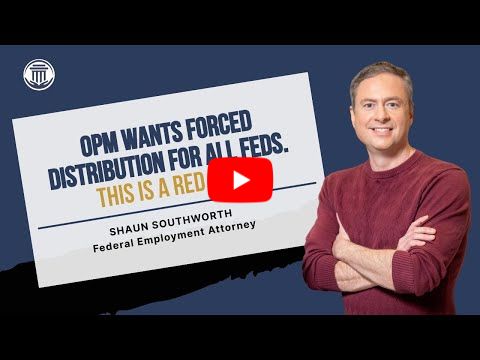
How OPM’s Push for Forced Distribution Could Impact Your Career
|
DOJ Memo Tells Auditors to Ignore PREA Protections
|

Worried About Retaliation or Being Targeted for Speaking Up?
If you’ve reported misconduct, safety concerns, discrimination, or waste/fraud/abuse—and now you’re seeing sudden schedule changes, bad performance reviews, or threats of discipline—you may be in whistleblower or retaliation territory.
We represent federal employees who:
-
Reported concerns and then saw adverse actions
-
Were sidelined, reassigned, or given impossible workloads after speaking up
-
Face investigations, PIPs, or proposed removals that look like payback
-
Need help navigating OSC complaints, EEO claims, or MSPB appeals tied to retaliation
A free, confidential consultation can help you sort out what’s normal agency behavior and what may cross the line—and what to do before your options narrow.
👉 Schedule Your Free Consultation Today
|

Disclaimer:
This briefing is for general informational purposes only and does not constitute legal advice or create an attorney‑client relationship. Federal employment law is fact‑specific and time‑sensitive; you should consult a qualified attorney about your own situation and deadlines. Past results do not guarantee future outcomes.
Your service is worth protecting. Let's protect it together at Southworth PC.

Responses