Attorneys for Federal Employees — Nationwide
Nearly 200,000 federal workers and supporters follow our updates across TikTok, Instagram, YouTube, Facebook, and LinkedIn. Each briefing gives you the three stories that actually matter to your job, plain‑English legal guidance, and one short practice to protect your peace of mind. If it helps you, forward it to a colleague—new readers can subscribe at https://fedlegalhelp.com/newsletter.
Today at a Glance
- Army shutdown timesheets: Some civilians say they were told to work, then told to say they didn’t—this is a documentation and integrity issue.
- OPM appeal rules: OPM is proposing to move some appeals away from MSPB—this could change your process and your rights.
- SSA reassignments: Some employees who process benefits are being shifted to phones—expect workload strain and changing priorities.
Top Stories:
1. Some Army Civilians Worked During the Shutdown—And Were Told to Say They Didn’t
Source: Government Executive (Defense) — February 9, 2026
TL;DR: Government Executive reports some Army civilian employees who were supposed to be furloughed were told to report to work, and later were instructed to code timecards as furlough time even for hours worked.
For federal employees, this means:
- If you were told to work during a shutdown while not “excepted,” your time-and-attendance records and emails matter.
- If anyone pressures you to certify a timesheet you believe is inaccurate, slow down and get guidance in writing.
- This kind of issue can turn into an investigation later—your clean documentation now can protect you later.
Legal Insight:
The Anti-Deficiency Act limits agency operations during a lapse in appropriations, and employees must certify their time is true and accurate. If you received conflicting guidance, save the emails, notices, and any instructions about “normal operations,” furlough status, or timesheet coding. If you are asked to submit something you believe is not accurate, ask for clarification in writing and request the specific authority or instruction behind it. Because deadlines can be short and the risks can be serious, consider talking with your union and a qualified federal employment attorney.
2. OPM Seeks to Consolidate Power Over Employee Appeals in New Regulations
Source: Government Executive — February 9, 2026
TL;DR: Government Executive reports OPM proposed new regulations that would let OPM adjudicate some appeals that are now handled by the Merit Systems Protection Board (MSPB), including certain suitability appeals and some reduction in force (RIF) appeals.
For federal employees, this means:
- The place you appeal—and what process you get (including whether you get a hearing)—could change for certain types of cases.
- If you are facing a suitability issue (like being found “not suitable”) or a RIF action, you may need to track new rules and new deadlines.
- Independent review matters. If the appeal process shifts, documenting and meeting deadlines becomes even more important.
Legal Insight:
MSPB appeal rights and processes come from federal civil service law, and the details can be technical—but the practical takeaway is simple: know your forum and protect your timeline. If you are impacted by suitability or RIF decisions, save every notice, email, and SF-50, and write down the date you received each document. Ask HR in writing what appeal options apply to your specific action and where the appeal is filed. Because deadlines can be short, consider talking with your union and a qualified federal employment attorney.
3. Social Security is Directing Employees Who Normally Process Benefits to Answer Phones Instead
Source: Government Executive — February 6, 2026 (updated Feb. 9)
TL;DR: Government Executive reports SSA is shifting employees who usually process benefits into phone-answering roles, reflecting staffing pressure and operational strain.
For federal employees, this means:
- Your duties and daily priorities may change quickly—even if your job normally focuses on processing work, not phones.
- Workload and performance expectations can get messy when your tasks shift without clear guidance.
- You should document what changed, when it changed, and what expectations you were given.
Legal Insight:
When duties shift, the safest move is to get expectations in writing. Ask your supervisor (politely and briefly) what your top priorities are right now, how performance will be measured during the shift, and whether deadlines are changing. Keep a simple weekly log of major assignments, constraints (training time, system limits), and any instructions you receive. If you think the reassignment is being used as punishment or retaliation, preserve emails and timelines. Because deadlines can be short, consider talking with your union and a qualified federal employment attorney.
Mindful Moment of the Day
When You Disagree With the Policy
Sometimes you’re asked to carry out a policy or decision you don’t fully agree with, and that can quietly eat at you. Take a moment at your desk to feel your breath and name the tension honestly: “I care about the mission, and I’m struggling with this part.” Then ask, “Within my role and rules, what is one small way I can bring my values—respect, fairness, kindness—into how I do this task?” You may not be able to change the decision today, but you can change the spirit in which you carry it out, which often eases some of the inner friction.
In Case You Missed It
A few quick hits from our recent videos and posts:
DHS Shutdown Deadline: What Federal Employees Should Expect
|

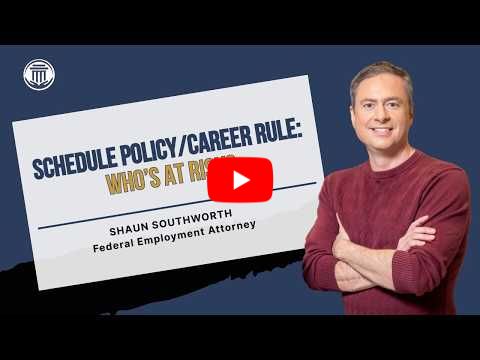
Schedule Policy/Career: Which Federal Jobs Are at Risk
|
From History to Policy: Black Employees in Federal Service
|

Judge Orders Musk Deposition Over USAID Shutdown
|

Facing Harassment or Discrimination?
If you’re dealing with slurs, exclusion, hostile emails, or sudden negative treatment after speaking up, you don’t have to wait until things get unbearable to explore your options.
We regularly represent federal employees in:
-
EEO complaints for discrimination, harassment, and hostile work environment
-
Retaliation for prior EEO activity or protected conduct
-
Reasonable accommodation disputes
-
Related discipline or performance issues that follow on the heels of complaints
In your free, confidential consultation, we’ll walk through what’s been happening, key dates (including the short EEO deadlines), and the tools available to you—formal and informal.
👉 Schedule Your Free Consultation Today
|

Disclaimer:
This briefing is for general informational purposes only and does not constitute legal advice or create an attorney‑client relationship. Federal employment law is fact‑specific and time‑sensitive; you should consult a qualified attorney about your own situation and deadlines. Past results do not guarantee future outcomes.
Your service is worth protecting. Let's protect it together at Southworth PC.

Responses