Attorneys for Federal Employees — Nationwide
Nearly 200,000 federal workers and supporters follow our updates across TikTok, Instagram, YouTube, Facebook, and LinkedIn. Each briefing gives you the three stories that actually matter to your job, plain‑English legal guidance, and one short practice to protect your peace of mind. If it helps you, forward it to a colleague—new readers can subscribe at https://fedlegalhelp.com/newsletter.
Today at a Glance
-
OPM “Schedule Policy/Career” guidance: Some employees may lose student loan repayment and pay incentives if reclassified.
-
RIF appeal process may change: OPM proposes shifting certain RIF appeals away from the MSPB and back to OPM.
-
RIF “pause” may expire soon: A temporary block on RIF activity is set to lapse after Feb. 13, which could change agency plans quickly.
Top Stories:
1. OPM Guidance: “Schedule Policy/Career” Positions May Lose Loan Repayment and Pay Incentives
Source: Federal News Network — Feb. 10, 2026
TL;DR: OPM issued guidance saying employees moved into “Schedule Policy/Career” positions will generally be ineligible for student loan repayment benefits and certain pay incentives going forward.
For federal employees, this means:
- If your position is identified for conversion, assume student loan repayment benefits and recruitment/relocation/retention incentives may stop going forward.
- If you already have a loan repayment or incentive agreement, ask—in writing—whether it will continue and under what terms.
- Ask HR whether your position is on the conversion list and request the agency’s written explanation of any benefit or incentive changes.
Legal Insight:
This is based on OPM’s implementation guidance for the “Schedule Policy/Career” framework, which can change how positions are classified and what benefits apply. Keep copies of your incentive agreements and student loan repayment documents. If you get notice of conversion, save the notice, track dates, and ask what criteria were used to classify your position. Because deadlines can be short, consider talking with your union and a qualified federal employment attorney.
2. Proposed Rule: OPM May Move Certain RIF Appeals Away From the MSPB
Source: FedSmith — Feb. 10, 2026
TL;DR: An OPM proposed rule would shift some Reduction-in-Force (RIF) appeals away from the MSPB and back to OPM, with a public comment period running to mid-March.
For federal employees, this means:
- If you’re facing a RIF (furlough over 30 days, separation, or demotion), the appeal forum and process may change.
- Start saving every RIF-related document now (notice, competitive area/level info, retention register details, and any deadlines).
- If you want to keep MSPB-style review, this is a chance to submit a public comment before the comment period closes.
Legal Insight:
The proposal ties to OPM’s RIF regulations (5 C.F.R. part 351) and a proposed rule titled “Reduction in Force Appeals.” If you receive a RIF notice, calendar every deadline immediately and don’t assume you can “fix it later.” Ask HR—in writing—for the retention register and the rules used to place you in your competitive area/level. Because deadlines can be short, consider talking with your union and a qualified federal employment attorney.
3. RIF “Pause” May Expire After Feb. 13: What That Could Mean For Your Agency
Source: Government Executive — Feb. 10, 2026
TL;DR: A statutory block that paused RIF activity is set to lapse after Feb. 13, which could change what agencies are allowed to do next.
For federal employees, this means:
- If your organization has been signaling downsizing, treat mid-February as a real turning point.
- Ask your component—in writing—whether RIF notices or restructuring actions are being planned.
- If you receive any notice, preserve it and request the documents that explain your placement and the basis for the action.
Legal Insight:
This issue involves funding measures and “limitation riders”—Congress can restrict the use of funds for certain actions, and when those restrictions expire, agencies may regain room to act. Save your SF-50s and performance records, which can matter for retention standing. If you are in a bargaining unit, check your contract for notice/consult requirements and involve your union early. Because deadlines can be short, consider talking with your union and a qualified federal employment attorney.
Legal Tip of the Day
Dealing with Harassment or Discrimination
If you believe you’re being harassed or treated differently because of your race, sex, age, disability, religion, national origin, or other protected status, quietly start documenting specific incidents: dates, comments, witnesses, and how it affected your work. Consider reporting it through at least one official channel—your supervisor, higher management, HR, or EEO—following your agency’s policy. Save copies of complaints and responses. Avoid responding in kind, even when you’re angry; that can be used against you later. These are emotionally heavy situations, and the legal standards can be confusing. If you’re unsure whether what you’re experiencing crosses the legal line, our firm can help you sort through it.
In Case You Missed It
A few quick hits from our recent videos and posts:
Shutdown Timecard Risks for Federal Employees
|

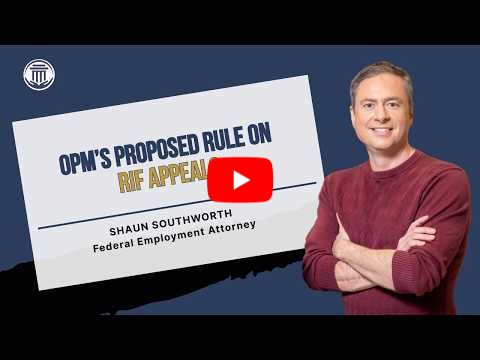
OPM RIF Appeal Rule: MSPB Rights at Risk
|
Black Federal Employees: History, Policy & Power
|

Can the Department of Education Be Dismantled?
|

Thinking About Federal Disability Retirement?
If your medical conditions make it hard to safely or consistently perform your federal job—even with accommodations—it may be time to explore OPM/FERS disability retirement.
We help federal employees:
-
Decide whether disability retirement is the right path compared to accommodation or reassignment
-
Gather and frame medical evidence so it speaks the language OPM expects
-
Prepare and submit disability retirement applications and related documentation
-
Coordinate strategy when disability retirement interacts with pending discipline, EEO complaints, or MSPB appeals
For most disability retirement matters, we offer full‑service application assistance for a flat fee of $5,000, plus any required costs. In a free consultation, we’ll talk through your health limitations, job duties, and timelines so you understand your options before you commit.
👉 Schedule Your Free Consultation Today
|

Disclaimer:
This briefing is for general informational purposes only and does not constitute legal advice or create an attorney‑client relationship. Federal employment law is fact‑specific and time‑sensitive; you should consult a qualified attorney about your own situation and deadlines. Past results do not guarantee future outcomes.
Your service is worth protecting. Let's protect it together at Southworth PC.

Responses