Attorneys for Federal Employees — Nationwide
Nearly 200,000 federal workers and supporters follow our updates across TikTok, Instagram, YouTube, Facebook, and LinkedIn. Each briefing gives you the three stories that actually matter to your job, plain‑English legal guidance, and one short practice to protect your peace of mind. If it helps you, forward it to a colleague—new readers can subscribe at https://fedlegalhelp.com/newsletter.
Today at a Glance
-
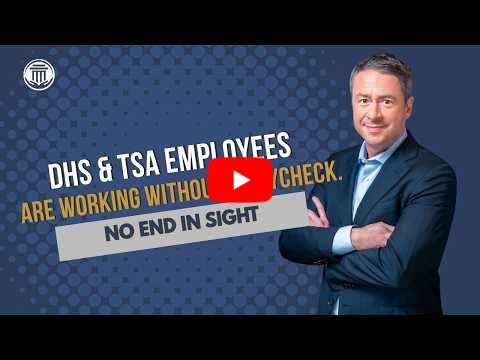
DHS Shutdown, Week Five: Hundreds of TSA workers have quit. Thousands more are going to food banks. No end in sight.
-
Judge Orders VOA Employees Back to Work: A federal court ruled that the near-total shutdown of Voice of America was illegal and ordered more than 1,000 employees to return by March 23.
-
Retirement Warning for Women in Federal Service: Breaks in service and forced separations are quietly shrinking retirement checks — and today's workforce cuts are making it worse.
Top Stories:
1. DHS Shutdown Reaches Five Weeks — TSA Workers Are Quitting, and Unions Are Demanding Action
Source: Federal News Network — March 17, 2026
TL;DR: The shutdown cutting off pay for DHS workers is now in its fifth week. Hundreds of TSA employees have quit. Congress still hasn't reached a deal.
For federal employees, this means:
- If you work at TSA, FEMA, Coast Guard, Secret Service, or CISA, you are most likely still required to show up — without pay.
- The law says you will get your back pay once the shutdown ends. But that guarantee doesn't make the money come faster. Bills don't wait.
- Quitting feels tempting when you can't pay rent — but if you quit, you lose your right to back pay and could lose retirement and benefits credit. Do not quit without talking to someone first.
Legal Insight:
A 2019 law called the Government Employee Fair Treatment Act guarantees back pay for employees who work during a shutdown. That's the good news. The hard news is that "guaranteed eventually" is not the same as "paid on time." If you are struggling to meet legal deadlines — like a complaint to the MSPB or EEOC — some agencies pause those deadlines during shutdowns, but you should not assume yours is paused without checking. Talk to your union rep or an attorney before you miss a deadline. And if you are thinking about resigning, get advice first — the financial and legal cost of quitting can be severe.
2. Federal Judge Orders More Than 1,000 Voice of America Employees Back to Work — Rules Wind-Down Was Illegal
Source: The Washington Post — March 17, 2026
TL;DR: A federal judge ruled that the near-total shutdown of the U.S. Agency for Global Media — the parent agency of Voice of America — broke federal law. He ordered more than 1,000 employees back to work by March 23 and told the agency to resume broadcasting.
For federal employees, this means:
- More than 1,000 VOA employees who have been on paid administrative leave for nearly a year now have a court order requiring the agency to bring them back.
- This ruling is a reminder that when an agency shuts down operations or puts employees on extended leave outside of proper legal procedures, courts can step in and reverse it.
- If you work at USAGM or a related broadcaster and have been waiting for clarity on your status, watch for agency communications this week — the return-to-work deadline is March 23.
Legal Insight:
This case shows why it matters when agencies skip proper legal procedures. U.S. District Judge Royce C. Lamberth — a Reagan appointee — found that the agency's wind-down violated federal administrative law, which requires agencies to follow the rules Congress set out for them. A three-page memo eliminating nearly all positions was not enough. If your agency has taken a dramatic action against you — a sudden reassignment, a mass administrative leave, or an informal "wind-down" of your office — that action may not be legally sound. Document everything. Note dates, what you were told, and by whom. Because deadlines can be short, consider talking with your union and a qualified federal employment attorney.
3. Women in Federal Service Still Face a Retirement Gap — And Today's Workforce Cuts Are Making It Worse
Source: Government Executive — March 12, 2026
TL;DR: Despite having a guaranteed pension through FERS, women in federal service still end up with less retirement income than their male counterparts — largely because of breaks in service, lower TSP contributions, and time away from work to care for family. Forced separations happening right now are making this worse.
For federal employees, this means:
- If you have ever taken unpaid leave, worked part-time, or had a break in federal service, those periods may not count toward your retirement — which means a smaller pension check.
- If you were recently pushed out through a RIF, the Deferred Resignation Program, or a probationary firing, your retirement calculation could be affected in ways you haven't been told about yet.
- You should request an estimate of your retirement annuity from your agency HR office now — in writing — so you know where you stand.
Legal Insight:
Under FERS, your pension is based on your years of creditable service and your highest three years of average pay. Unpaid leave of more than six months in a single calendar year generally does not count as creditable service. If your official service record has errors — wrong dates, missing time, or an incorrect separation code — those errors will shrink your check. Ask your HR office in writing to confirm your service computation date and correct any mistakes before you separate. If you are within five years of retirement eligibility, this review is especially important right now.
Legal Tip of the Day
When You’re Placed on a PIP (Performance Improvement Plan)
A PIP can feel like a warning sign—and often it is. It may be presented as a chance to improve, but it can also become the foundation for future discipline or removal. What matters most is how the situation is handled from the beginning. Start documenting everything: expectations, feedback, and any support (or lack of support) provided. Follow instructions carefully, but also keep copies of your work and communications outside of government systems. Small details can make a difference later.
In Case You Missed It
A few quick hits from our recent videos and posts:
VA Union Rights Restored: What It Means for Feds
|

Boston Judge Halts RFK Jr. Vaccine Overhaul
|

TSA Shutdown Pay Rights for Federal Employees
|
Thinking About Federal Disability Retirement?
If your medical conditions make it hard to safely or consistently perform your federal job—even with accommodations—it may be time to explore OPM/FERS disability retirement.
We help federal employees:
-
Decide whether disability retirement is the right path compared to accommodation or reassignment
-
Gather and frame medical evidence so it speaks the language OPM expects
-
Prepare and submit disability retirement applications and related documentation
-
Coordinate strategy when disability retirement interacts with pending discipline, EEO complaints, or MSPB appeals
For most disability retirement matters, we offer full‑service application assistance for a flat fee of $5,000, plus any required costs. In a free consultation, we’ll talk through your health limitations, job duties, and timelines so you understand your options before you commit.
👉 Schedule Your Free Consultation Today
|

Disclaimer:
This briefing is for general informational purposes only and does not constitute legal advice or create an attorney‑client relationship. Federal employment law is fact‑specific and time‑sensitive; you should consult a qualified attorney about your own situation and deadlines. Past results do not guarantee future outcomes.
Your service is worth protecting. Let's protect it together at Southworth PC.

Responses