Attorneys for Federal Employees — Nationwide
Nearly 200,000 federal workers and supporters follow our updates across TikTok, Instagram, YouTube, Facebook, and LinkedIn. Each briefing gives you the three stories that actually matter to your job, plain‑English legal guidance, and one short practice to protect your peace of mind. If it helps you, forward it to a colleague—new readers can subscribe at https://fedlegalhelp.com/newsletter.
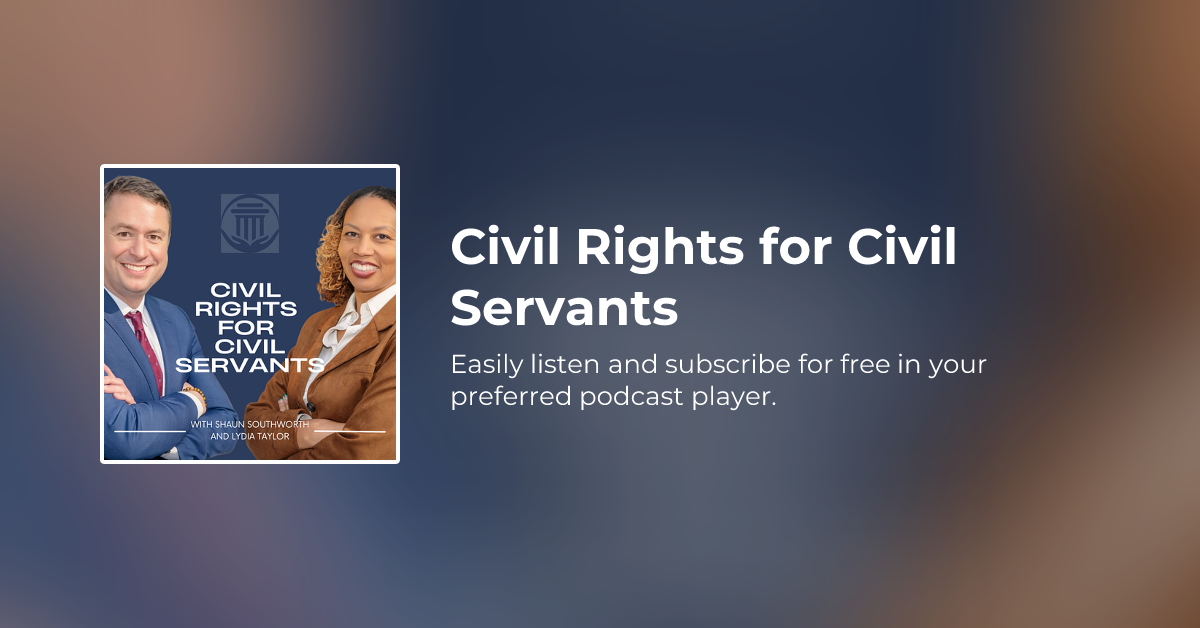
🎧 Listen: Civil Rights for Civil Servants
Shaun Southworth & Lydia Taylor on what's happening to the federal workforce. Latest episode: Apple · Spotify · Amazon Music · Youtube
 |
Today at a Glance
-
MSPB Penalty Rule Takes Effect Monday: Starting October 5, the Merit Systems Protection Board will no longer require a walk through all twelve Douglas factors in misconduct appeals. The new standard applies to appeals filed on or after Monday, so the filing date now matters.
-
OPM Sets an 80-Day Hiring Clock: A September 30 OPM memorandum tells agencies to complete every hiring action within 80 calendar days, including 66 days to a tentative offer and entry on duty within 14 days of acceptance. It covers merit promotion and shared certificates, not just outside hires.
-
Picking a 2027 Retirement Date: Government Executive published its annual best-dates calendar. The day you leave decides when your annuity starts and how much leave you cash out, and a planned 2027 pay freeze changes the usual end-of-year math.
Top Stories:
1. The MSPB's New Penalty-Review Rule Takes Effect Monday — Appeals Filed On or After October 5 Get "Substantial Deference" to the Agency's Penalty, and Appeals Already Pending Keep the Old Framework
TL;DR: The Merit Systems Protection Board's final rule, "Determining the Appropriate Penalty for Federal Employees Charged With Misconduct," 91 Fed. Reg. 56549 (Sept. 3, 2026), takes effect Monday, October 5. The rule states that it applies "to appeals filed with the Board on or after October 5, 2026," and that "appeals pending before the Board on the effective date will be adjudicated under the framework in effect when they were filed." Under the new 5 C.F.R. § 1201.56(b)(3), which applies only to appeals under 5 U.S.C. § 7513, "the agency's choice of penalty is entitled to substantial deference," and the Board "will review a penalty only to determine whether it is within the tolerable limits of reasonableness in light of the charges sustained," judged on the totality of the circumstances. The Board will no longer require consideration of the twelve factors from Douglas v. Veterans Administration, 5 M.S.P.R. 280 (1981), in every case, and when it sustains all charges it "will not substitute its judgment for the judgment of the deciding official." If the penalty falls outside those limits, the Board "may mitigate the agency's original penalty to the maximum reasonable penalty." This briefing covered the rule when it was published on September 3; what is new is that the effective date arrives Monday, and the filing date now determines which framework applies.
For federal employees, this means:
- If you have received a removal, demotion, or suspension of more than 14 days and your 30-day appeal window spans this weekend, the day you file is now a legal decision. An appeal filed before Monday is decided under the Douglas framework; one filed Monday or later is decided under the new rule. Do not let the deadline slip while you decide.
- The agency's obligations are unchanged: it must still prove its charges by a preponderance of the evidence, and the decision letter must still state the specific reasons. Your written reply to the proposal is where the mitigating facts go, and it matters more now that the Board has promised to defer to the deciding official.
- The rule applies only to adverse-action appeals under 5 U.S.C. § 7513. Performance-based actions under chapter 43 are reviewed under their own standard, and anyone whose appeal is already pending on October 5 keeps the framework in effect when it was filed.
Legal Insight
Under 5 U.S.C. § 7513(b), an employee facing an adverse action is entitled to at least 30 days' advance written notice stating the specific reasons, a reasonable time but not less than seven days to answer, representation, and a written decision with the specific reasons for it. The appeal must be filed within 30 days of the effective date of the action or 30 days after receipt of the decision, whichever is later, under 5 C.F.R. § 1201.22(b)(1), and the agency carries the burden of proving its charges by a preponderance of the evidence under 5 U.S.C. § 7701(c)(1)(B). The new § 1201.56(b)(3) changes how the Board reviews the penalty, not whether the agency has to prove the misconduct; if your appeal deadline falls near Monday, consult a federal employment attorney or your representative before the weekend.
2. OPM Tells Agencies to Finish Every Hiring Action in 80 Days — 66 Days to a Tentative Offer, Two Days to Accept, and Entry on Duty Within 14 Days, Covering Merit Promotion and Shared Certificates as Well as Outside Hires
Source: Office of Personnel Management (memorandum to Chief Human Capital Officers), September 30, 2026
TL;DR: On September 30, OPM Associate Director Veronica E. Hinton issued "Guidance on Time-to-Hire Under the Merit Hiring Plan," citing Executive Order 14170 and the Merit Hiring Plan. The memorandum states that "agencies must manage all hiring actions within an overall 80-calendar-day timeframe," which "encompasses 66 calendar days from validated hiring need to tentative job offer, acceptance of the tentative job offer within 2 days, and Entry on Duty (EOD) within 14 days of acceptance." It tells agency leadership to use Strategic Hiring Committees for oversight and tells personnel vetting offices to engage early on "reciprocity opportunities, and interim credentialing options." OPM lists hiring models with target timelines of about 46, 59, and 66 days, depending on the number and type of assessments, plus pooled or shared certificate approaches. Agencies must set measurable targets reviewed at least quarterly and report time-to-hire data for all hiring, including "merit promotion and external hires, Direct-Hire Authority actions, pooled or shared certificate hires." The memo arrives less than two weeks after OPM told agencies to replace the executive-order essay question on job announcements under a court order, which this briefing covered on September 28.
For federal employees, this means:
- If you are applying for a federal job, OPM's own clock says you should see a tentative offer about 66 days after the agency validates the need and start work within 14 days of accepting. The usual delay is personnel vetting, so have your investigation paperwork and prior clearance information ready, and ask HR which step you are in if the clock runs long.
- Internal candidates are covered. The memo counts merit promotion actions and shared certificates in the 80-day standard, and a shared certificate means an agency may hire from a list another agency built, so read each announcement for whether it is open to other agencies' certificates.
- Speed does not change the merit rules. Assessments must still be job-related, veterans' preference still applies, and a selection based on political affiliation or another prohibited factor is still a prohibited personnel practice, whether it took 46 days or 146.
Legal Insight
The merit system principles in 5 U.S.C. § 2301(b)(1) require selection "solely on the basis of relative ability, knowledge, and skills, after fair and open competition," and 5 C.F.R. § 300.103 requires that any employment practice used to screen applicants be based on a job analysis and be job-related. A hiring decision that grants an unauthorized preference or rests on political affiliation is a prohibited personnel practice under 5 U.S.C. § 2302(b)(1) and (b)(6), which the Office of Special Counsel investigates under 5 U.S.C. § 1214. If you believe a selection or non-selection involved discrimination, the 45-day deadline to contact an EEO counselor under 29 C.F.R. § 1614.105(a)(1) runs from the date you learned of it, and a federal employment attorney can help you sort out which route fits before that clock runs.
3. Retiring in 2027? The Date You Leave Decides When Your Annuity Starts and How Much Leave You Cash Out — and a Planned Pay Freeze Changes the Usual End-of-Year Math
Source: Government Executive, October 1, 2026
TL;DR: Government Executive published its annual "Best Dates to Retire" calendar for 2027 on Thursday. Columnist Tammy Flanagan writes that the date an employee leaves "can affect when your retirement annuity begins" and "how much you receive in your lump-sum payment for unused annual leave." Under FERS, an annuity generally begins on the first day of the month after separation, so retiring on the last day of a month avoids an unpaid gap, and the end of the leave year matters because leave above the carryover limit is forfeited once the new leave year begins. The rules differ for CSRS and CSRS Offset employees, the column notes, so there is no single best date. The leave year 2026 ends on January 9, 2027, and the first full pay period of 2027 begins January 10. One factor is different this year: the administration has proposed a pay freeze for most General Schedule employees in 2027, so the usual advantage of carrying leave into January to be paid at a higher rate may not exist if the freeze takes effect.
For federal employees, this means:
- Under FERS, retiring on the last day of a month starts your annuity on the first of the next month. Retiring on the second or third costs most employees a month of annuity for a few days of pay. Confirm your own category before choosing a date; some retirements begin the day after separation.
- Your lump-sum payment covers all accrued and accumulated annual leave, including use-or-lose hours, if you separate before the leave year ends on January 9, 2027. Work after that date and the hours above your carryover ceiling (240 for most employees) are gone.
- The lump sum is paid at the rate you would have earned had you stayed on leave. In a raise year that rewards leave projected past the raise date; in a freeze year it does not, so a December 31 versus early-January comparison should be run with no raise assumed unless Congress acts.
Legal Insight
Under 5 U.S.C. § 8464(a)(1)(A), a FERS annuity on an immediate retirement under § 8412 "commences on the first day of the month after" separation from the service, while certain involuntary and other retirements under § 8414(b)(1)(A) and (c) begin the day after separation under § 8464(a)(1)(B). The lump-sum leave payment under 5 U.S.C. § 5551(a) "shall equal the pay the employee or individual would have received had he remained in the service until expiration of the period of the annual or vacation leave," and 5 U.S.C. § 6304(a) caps the annual leave most employees may carry into a new leave year at 30 days, with the excess forfeited at the start of the first full pay period of the year unless restored under § 6304(d). Pull your leave and earnings statement and SF-50s now, confirm your service computation date and leave balance, and build the date around those numbers.
Legal Tip of the Day
When a Letter About Your Job Arrives, Find the Deadline First
When you receive a proposal, a decision, or any letter about your job, the first thing to look for is not the reasoning — it is the deadline. Many letters state how long you have to respond or appeal and where to file, some of those windows are short, and different forums run on different clocks. Write down the date you received the letter, the deadline, and where to file on a private timeline outside government systems. Count the days yourself and act well before the last one. If the letter does not state a deadline, ask in writing who to contact and what time limits apply. Do not assume a deadline will wait while you gather documents, look for representation, or pursue the matter somewhere else.
In Case You Missed It
A few quick hits from our recent posts:
GAO's DOGE Report: Did DOGE Have Access to Your Federal Personnel File?
|

|

IRS “Team C” Reassignments: Your Rights When Your Agency Details You
|

Worried About Retaliation or Being Targeted for Speaking Up?
If you’ve reported misconduct, safety concerns, discrimination, or waste/fraud/abuse—and now you’re seeing sudden schedule changes, bad performance reviews, or threats of discipline—you may be in whistleblower or retaliation territory.
We represent federal employees who:
-
Reported concerns and then saw adverse actions
-
Were sidelined, reassigned, or given impossible workloads after speaking up
-
Face investigations, PIPs, or proposed removals that look like payback
-
Need help navigating OSC complaints, EEO claims, or MSPB appeals tied to retaliation
A free, confidential consultation can help you sort out what’s normal agency behavior and what may cross the line—and what to do before your options narrow.
👉 Schedule Your Free Consultation Today
|

Disclaimer:
This briefing is for general informational purposes only and does not constitute legal advice or create an attorney‑client relationship. Federal employment law is fact‑specific and time‑sensitive; you should consult a qualified attorney about your own situation and deadlines. Past results do not guarantee future outcomes.
Your service is worth protecting. Let's protect it together at Southworth PC.

Responses