Attorneys for Federal Employees — Nationwide
Nearly 200,000 federal workers and supporters follow our updates across TikTok, Instagram, YouTube, Facebook, and LinkedIn. Each briefing gives you the three stories that actually matter to your job, plain‑English legal guidance, and one short practice to protect your peace of mind. If it helps you, forward it to a colleague—new readers can subscribe at https://fedlegalhelp.com/newsletter.
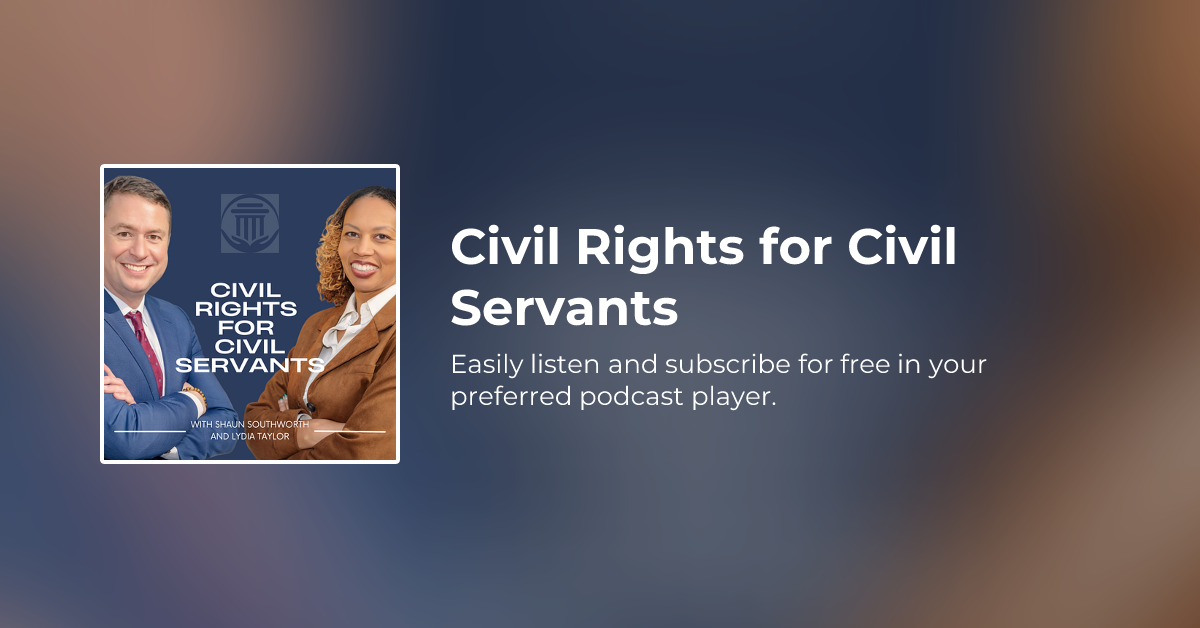
🎧 Listen: Civil Rights for Civil Servants
Shaun Southworth & Lydia Taylor on what's happening to the federal workforce. Latest episode: Apple · Spotify · Amazon Music · Youtube
 |
Today at a Glance
-
Open Season Starts Today: The Federal Benefits Open Season for the 2027 plan year runs through Monday, December 14. The average enrollee share of FEHB premiums rises 10.9 percent, and anyone adding a family member must now submit proof of eligibility.
-
FEHB Coverage Lawsuit: Two federal employees have asked a federal judge in Washington to block OPM's 2027 exclusion of hormonal and surgical gender-transition care from FEHB and PSHB plans before the plan year begins. OPM's response is due November 25.
-
Your Survey Answers: OPM published a Privacy Act notice this morning for the records system behind the survey replacing the FEVS. Your own agency, not OPM, will hold any identifiable responses; comments are due December 9.
Top Stories:
1. Open Season Opens Today — Premiums Rise 10.9 Percent on Average, Every New Family Member Needs Proof of Eligibility, and the Choices You Make Now Decide Whether FEHB Follows You Into Retirement
Source: Government Executive, November 5, 2026
TL;DR: The Federal Benefits Open Season for the 2027 plan year opens today and closes Monday, December 14, 2026. Employees and annuitants can enroll in or change FEHB (Federal Employees Health Benefits) and PSHB (Postal Service Health Benefits) coverage, change FEDVIP dental and vision plans, and, for active employees only, re-enroll in FSAFEDS, which does not carry over. OPM's Open Season highlights put the overall average FEHB premium increase at 9.3 percent, with the enrollee share up 10.9 percent and the government share up 8.6 percent; the average PSHB enrollee share rises 8.2 percent. New this year, under section 90101 of Public Law 119-21 (the FEHB Protection Act of 2025), anyone adding a family member during Open Season must submit supporting documents so the employing office can verify eligibility. Government Executive's Tammy Flanagan adds that employees nearing retirement face their own Open Season decisions: the five-year enrollment test for carrying FEHB into retirement, the paper SF 2809 that Benefits Administration Letter 24-103 requires when a retiring employee's election takes effect after retirement, and the RI 79-9 form that lets a retiree suspend, rather than cancel, coverage to use TRICARE. The verification push follows OPM's November 2 announcement that a Treasury death-data match found about 50,000 deceased individuals still listed in the program.
For federal employees, this means:
- Check your plan's 2027 brochure and premium before December 14 even if you expect to stay put. Health, dental, and vision enrollments roll over automatically, but FSAFEDS requires a new election every year, and changes vary widely by plan.
- If you are adding a spouse, child, or other family member, gather the documents now. The new verification requirement applies to every addition made during Open Season, and OPM says you must submit supporting documentation so the family member's eligibility can be verified.
- If retirement is within a few years, confirm now that you will meet the five-year test under 5 U.S.C. § 8905(b). If you are retiring this winter, ask HR whether your election must go on a paper SF 2809 routed with your retirement package.
Legal Insight
Open Season itself is a creature of regulation: 5 C.F.R. § 890.301(f) sets it from the Monday of the second full workweek in November through the Monday of the second full workweek in December and lets the OPM Director adjust the dates. The government's contribution is fixed by statute at 72 percent of the program-wide weighted average premium, capped at 75 percent of any particular plan's premium, 5 U.S.C. § 8906(b). That formula sets the government's share; everything above it is yours. To keep FEHB in retirement, 5 U.S.C. § 8905(b) requires an immediate annuity and continuous enrollment for the five years of service before retirement, or since your first opportunity to enroll if that is shorter, subject to OPM's discretion to waive the requirement. If your employing office denies an enrollment or a family member's eligibility, 5 C.F.R. § 890.104(d) gives you 30 calendar days from the written decision to request reconsideration, so get a denial letter to your benefits officer or a federal employment attorney right away.
2. Two Federal Employees Ask a Judge to Block OPM's 2027 Exclusion of Gender-Transition Care From FEHB Plans Before the Plan Year Starts — the Title VII Question of What a Federal Health Plan Must Cover
Source: Federal News Network, November 6, 2026
TL;DR: Two of the five pseudonymous plaintiffs in Doe v. Kupor, No. 1:26-cv-02723 (D.D.C.), a Title VII class action filed August 3 against OPM Director Scott Kupor, moved on November 4 for a preliminary injunction (Dkt. 26) and provisional class certification (Dkt. 28). They ask Judge Amit P. Mehta to bar OPM from requiring or enforcing what they call the 2027 Exclusion: the directive in FEHB Program Carrier Letter No. 2026-07 (March 31, 2026) that ends coverage of hormonal and surgical gender-transition care for the 2027 plan year, including for enrollees who were mid-treatment and had case-by-case exceptions in 2026. Federal News Network reports that, starting in January, FEHB and PSHB plans will cover only counseling for this condition. The two movants, a State Department IT specialist and a Defense Department researcher, argue the exclusion discriminates because of sex under Title VII and Bostock v. Clayton County, 590 U.S. 644 (2020); the motion cites an estimate of 39,400 to 57,800 transgender enrollees and dependents in the two programs. On November 6 the parties filed competing briefing schedules (Dkt. 29): both set OPM's opposition for November 25, but OPM wants to pair it with a cross-motion to dismiss and close briefing December 14, while the plaintiffs want briefing done December 9 so the court can rule before the changes take effect on January 1, 2027, for PSHB and January 10 for most FEHB enrollees. OPM has signaled it will argue the claim fails under United States v. Skrmetti, 605 U.S. 495 (2025). FNN reports the plaintiffs first took the dispute to the EEOC, which rejected it in March; OPM declined to comment on the pending case.
For federal employees, this means:
- Nothing has changed for Open Season yet. Unless the court rules otherwise, the 2027 brochures reflect the exclusion, so compare plans as written and keep records of any care you pay for out of pocket after January.
- Watch the docket. OPM's opposition is due November 25 under either proposal, and briefing closes December 9 or 14, so a ruling could come after Open Season ends but before most FEHB changes take effect January 10.
- The case follows the two-step path most federal-sector discrimination claims must take: the EEO process first, then a civil action in district court. The administrative clock starts long before any lawsuit can.
Legal Insight
Title VII reaches federal employment through 42 U.S.C. § 2000e-16(a), which requires that personnel actions affecting federal employees be made free from any discrimination based on sex, and Bostock held that firing an employee for being transgender is discrimination because of sex. Whether that reasoning reaches a health plan's exclusions, and how Skrmetti's equal-protection holding bears on a statutory Title VII claim, are the questions before the court. OPM's authority to set plan terms comes from the FEHB Act, 5 U.S.C. § 8902, and a preliminary injunction requires a likely win on the merits, irreparable harm, and a favorable balance of equities and public interest under Winter v. NRDC, 555 U.S. 7, 20 (2008). Any federal employee who believes a benefits decision discriminates on a protected basis must contact an EEO counselor within 45 days of the matter, or of the effective date of a personnel action, under 29 C.F.R. § 1614.105(a)(1), so talk to a federal employment attorney early; that deadline is unforgiving.
3. OPM Publishes the Privacy Act Notice for the Survey That Replaces the FEVS — Your Agency, Not OPM, Will Hold Your Identifiable Answers, and Comments Are Due December 9
Source: Federal Register (Office of Personnel Management), November 9, 2026
TL;DR: In today's Federal Register, OPM renamed and rewrote the system of records behind the Federal Employee Viewpoint Survey (FEVS) as OPM/Central-21, Annual Employee Survey, 91 Fed. Reg. 70906 (Nov. 9, 2026), and spelled out how the new model works. Each agency will administer OPM's common questions to its own employees on the platform it chooses, may keep the identifiers it uses to run the survey, and will send OPM and OMB only de-identified respondent-level records for the 10 required items plus methodology and weighting information. OPM's own system now covers only the survey it runs for its own employees and the legacy FEVS data it still holds, which can include names, Social Security numbers, demographics, salary, and survey responses, retrievable by name or SSN. For everyone else, the agency running the survey must provide its own privacy notice and separately assess its Privacy Act, compliance, and vendor obligations. OPM also acknowledges that even without direct identifiers, specific demographic responses may create the potential for identification. Comments are due December 9, 2026, and the changes take effect December 10.
For federal employees, this means:
- Before you answer your agency's next survey, read the Privacy Act statement it gives you. It should tell you whether responses are linked to your name or an identifier, who inside the agency can see them, and how long they are kept.
- If your agency uses an outside vendor or asks demographic questions that could single out a small office, those choices are now its responsibility. If it keeps responses retrievable by your name or an identifier, the Privacy Act requires a published system-of-records notice covering them.
- You can comment on OPM's notice at regulations.gov through December 9. The published routine uses include disclosure to the Justice Department for litigation and to law enforcement when a record points to a possible violation of law.
Legal Insight
The Privacy Act requires every agency that keeps records retrievable by name or identifier to publish a system-of-records notice describing the records, their uses, and how to access them, 5 U.S.C. § 552a(e)(4), and to give the public at least 30 days to comment on any new or revised routine use, § 552a(e)(11). It also bars disclosure of a covered record without the employee's written consent except under a published routine use or another listed exception, § 552a(b). The survey itself is mandatory for agencies under section 1128 of the National Defense Authorization Act for Fiscal Year 2004, Pub. L. No. 108-136, 117 Stat. 1641 (5 U.S.C. § 7101 note), with OPM's required questions set in 5 C.F.R. part 250, subpart C. An agency that keeps identifiable responses without a covering notice, or shares them outside its routine uses, faces a civil action under § 552a(g), though damages require proof the violation was intentional or willful.
Legal Tip of the Day
Paper Trails for Benefits Deadlines
Open Season is a good reminder that benefits paperwork runs on deadlines, and different decisions run on different clocks. If you are adding a family member or making a change that affects your coverage, gather your documents early and submit them in a way that leaves a record, such as a confirmation page or an email to your benefits office. Keep your own copy of everything you send and receive in a private file outside government systems, and write down the date you submitted it. If you receive a denial, ask for it in writing and ask what the deadline is for requesting a review. Do not assume a verbal answer from HR settles the question, and do not wait to find out which deadline applies to you.
In Case You Missed It
A few quick hits from our recent posts:
Harmeet Dhillon Steps Down at DOJ: What Her Civil Rights Division Record Means for Federal Employees
|

What a Congressional Document-Preservation Letter to Elon Musk Actually Does
|

Read the Room? Hatch Act Basics for Every Federal Employee, However You Voted
|

Worried About Retaliation or Being Targeted for Speaking Up?
If you’ve reported misconduct, safety concerns, discrimination, or waste/fraud/abuse—and now you’re seeing sudden schedule changes, bad performance reviews, or threats of discipline—you may be in whistleblower or retaliation territory.
We represent federal employees who:
-
Reported concerns and then saw adverse actions
-
Were sidelined, reassigned, or given impossible workloads after speaking up
-
Face investigations, PIPs, or proposed removals that look like payback
-
Need help navigating OSC complaints, EEO claims, or MSPB appeals tied to retaliation
A free, confidential consultation can help you sort out what’s normal agency behavior and what may cross the line—and what to do before your options narrow.
👉 Schedule Your Free Consultation Today
|

Disclaimer:
This briefing is for general informational purposes only and does not constitute legal advice or create an attorney‑client relationship. Federal employment law is fact‑specific and time‑sensitive; you should consult a qualified attorney about your own situation and deadlines. Past results do not guarantee future outcomes.
Your service is worth protecting. Let's protect it together at Southworth PC.

Responses