Attorneys for Federal Employees — Nationwide
Nearly 200,000 federal workers and supporters follow our updates across TikTok, Instagram, YouTube, Facebook, and LinkedIn. Each briefing gives you the three stories that actually matter to your job, plain‑English legal guidance, and one short practice to protect your peace of mind. If it helps you, forward it to a colleague—new readers can subscribe at https://fedlegalhelp.com/newsletter.
🎧 Listen: Civil Rights for Civil Servants
Shaun Southworth & Lydia Taylor on what's happening to the federal workforce. Latest episode: Apple · Spotify · Amazon Music · Youtube
 |
Today at a Glance
- Defense Bill and Civilian Pay: The House narrowly passed its $1.15 trillion fiscal 2027 defense policy bill. It backs a 5% to 7% raise for service members, stays silent on a raise for DoD civilians, and keeps a provision blocking the department from spending 2027 funds to end collective bargaining for its civilian workforce.
- Probationary Firings at the Federal Circuit: Fired DHS and Interior probationary employees have filed their opening brief at the Federal Circuit, arguing the MSPB was wrong to rule it had no jurisdiction to review whether the 2025 mass terminations were unlawful reductions in force.
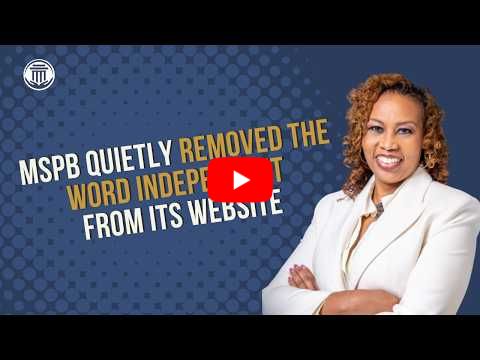
- MSPB Drops "Independent": After the Supreme Court's decision in Trump v. Slaughter, the MSPB is removing the word "independent" from its public-facing descriptions. The Board says its adjudicatory functions remain unchanged.
Top Stories:
1. House Passes the 2027 Defense Bill — Military Raise In, Civilian Raise Out, Union Protections Kept
Source: Federal News Network, July 23, 2026
TL;DR: The House narrowly passed its version of the fiscal 2027 National Defense Authorization Act (NDAA) on Wednesday evening, July 22. The $1.15 trillion bill backs the administration's request to raise all service members' pay by 5% to 7%, but it does not mention a pay raise for the Defense Department's civilian workforce. Lawmakers defeated, 254-175, an amendment that would have required the Pentagon to examine options for reducing its civilian workforce by 200,000 employees, with 43 Republicans joining Democrats in opposition. The bill also keeps a provision barring DoD from using fiscal 2027 funds to implement the 2025 executive order that removed collective bargaining rights for the department's civilian workers; an amendment that sought to strike that provision was not offered on the floor. The bill would further bar the use of 2027 funds to terminate employees in military child development programs, the Department of Defense Education Activity, and the Defense Health Agency, and would prohibit a hiring freeze for a range of civilian roles, including civilian mariners, childcare workers, and employees at depots, shipyards, and arsenals. The bill now heads to the Senate, whose Armed Services Committee version includes a 3.6% across-the-board military raise and is likewise silent on civilian pay.
For federal employees, this means:
- If you are a DoD civilian, your January 2027 raise is not set by the NDAA. It rides on the appropriations process — and if Congress stays silent there too, on the administration's pay plan, which proposed no general increase.
- The House provision protecting collective bargaining at DoD survived this round, but a similar provision was stripped from the final defense bill last year. What matters is what the eventual House-Senate agreement keeps.
- The defeated study amendment signals bipartisan resistance to another round of large DoD civilian cuts, but it was one vote on one amendment — not a bar on future reorganizations or RIFs (Reductions in Force).
Legal Insight:
When Congress does not legislate a January pay adjustment, the default runs through the president's authority under 5 U.S.C. § 5303, including the alternative pay plan mechanism in § 5303(b). Collective bargaining rights for most DoD civilians come from the Federal Service Labor-Management Relations Statute, 5 U.S.C. §§ 7101-7135; the 2025 executive order invoked the national-security exclusion in 5 U.S.C. § 7103(b)(1) to remove much of DoD from that statute's coverage, and the House provision would deny fiscal 2027 funds to implement it. Funding restrictions operate year to year — they limit what the agency may do with 2027 money, not what the law permits afterward.
2. Fired Probationary Employees Take the Mass-Termination Fight to the Federal Circuit
Source: Federal News Network, July 21, 2026
TL;DR: Fired probationary employees from the Department of Homeland Security and the Interior Department filed an opening brief in the U.S. Court of Appeals for the Federal Circuit on July 7, challenging MSPB rulings that the Board lacked jurisdiction to review their 2025 mass terminations. Interior terminated about 1,700 probationary employees and DHS fired 313 — among more than 25,000 probationary employees fired governmentwide in early 2025. The Board's chief administrative judge certified classes for both groups but later ruled that the mass firings were not reductions in force, so the Board could not hear the cases. The brief argues the Board should be able to review whether the government carried out what was in substance a RIF without following RIF procedures — including the retention protections those procedures give veterans and longer-serving employees. In a separate case last September, a federal judge found OPM unlawfully directed the mass firings "under false pretense" and ordered agencies to correct the employees' personnel files, though not to reinstate them. The government's response to the opening brief is due September 25.
For federal employees, this means:
- If you were part of the 2025 probationary terminations at DHS or Interior, this appeal is the vehicle that decides whether those class cases can return to the Board. Watch it even if you have moved on to other work.
- Probationary employees are not rights-free. Alleged RIF-procedure violations, discrimination, and whistleblower reprisal can each open an appeal or complaint route even during the probationary period.
- If your records from the 2025 wave coded your termination as performance-based, confirm your former agency corrected them consistent with last September's ruling — accurate coding matters for future federal employment.
Legal Insight:
Most probationers are excluded from the definition of "employee" for Chapter 75 adverse-action appeals under 5 U.S.C. § 7511(a)(1), which is why the RIF question is central: an employee separated by a reduction in force may appeal to the Board under 5 C.F.R. § 351.901 by alleging the agency failed to follow the RIF regulations in 5 C.F.R. Part 351 — and Part 351, not Chapter 75, is what protects retention standing based on tenure, veterans' preference, and service. The Federal Circuit will decide whether the 2025 mass probationary terminations must be tested against those rules. If you were terminated during probation in that wave, a federal employment attorney can help you evaluate what this appeal may mean for your options and deadlines.
3. The MSPB Stops Calling Itself "Independent" — What That Does and Does Not Change for Your Appeal
Source: Federal News Network, July 21, 2026
TL;DR: The MSPB is removing the word "independent" from its public-facing descriptions, including its website and job announcements. A Board spokesperson told Federal News Network the change comes "in light of recent legal developments and the Supreme Court's decision in Slaughter," and said the Board's adjudicatory functions remain unchanged. In June, the Supreme Court upheld the removal of Federal Trade Commission member Rebecca Slaughter, whom the president fired without cause despite a statute requiring one; the decision displaced the 91-year-old Humphrey's Executor precedent that had insulated members of multi-member agencies from at-will removal, and its logic extends to the MSPB. The Board's website formerly described it as "an independent, quasi-judicial agency"; it now says "quasi-judicial." Former Board member Raymond Limon noted the decision addressed presidential authority over agency leaders and did not amend the Civil Service Reform Act or redefine the Board's statutory role. The change lands amid other shifts: pending OPM proposals would move suitability, probationary, and RIF appeals out of the Board, and the Board's attorney-advisor positions were recently converted to Schedule Policy/Career.
For federal employees, this means:
- Your appeal rights are unchanged today. The Board is still accepting and deciding appeals, and the 30-day deadline to appeal an appealable adverse action still runs from the effective date of the action.
- The label change reflects the removal framework Board members now serve under after Slaughter — context worth understanding when you and your representative weigh settlement against litigating to a decision.
- Watch the pending OPM proposals to move suitability, probationary, and RIF appeals from the Board to OPM. If finalized, they would change where — and how — those cases are heard.
Legal Insight:
Congress created the Board in the Civil Service Reform Act of 1978 to adjudicate appeals of covered personnel actions, 5 U.S.C. §§ 1201-1204, and provided that members may be removed by the president "only for inefficiency, neglect of duty, or malfeasance in office," 5 U.S.C. § 1202(d). Trump v. Slaughter concerns the president's power to remove agency leaders notwithstanding provisions like that one; it did not change the appeal rights, burdens, or deadlines in 5 U.S.C. § 7701 or the Board's regulations at 5 C.F.R. Part 1201. If you have a pending appeal or are weighing one, a federal employment attorney can help you assess timing and strategy as the Board's landscape shifts.
Legal Tip of the Day
Speaking Up About Waste, Fraud, or Abuse
Reporting waste, fraud, abuse, gross mismanagement, safety risks, or legal violations can be protected in many circumstances, but how the disclosure is made matters. Keep the report factual, professional, and focused on what you know. Record what was disclosed, when, to whom, and what happened afterward. Do not remove classified, privileged, confidential, or restricted government information to support your claim, and do not assume every workplace complaint automatically qualifies as whistleblowing. If negative actions follow, such as discipline, reassignment, exclusion, or threats, the timeline may become important. Southworth PC can help federal employees evaluate possible whistleblower retaliation and understand available options.
In Case You Missed It


Worried About Retaliation or Being Targeted for Speaking Up?
If you’ve reported misconduct, safety concerns, discrimination, or waste/fraud/abuse—and now you’re seeing sudden schedule changes, bad performance reviews, or threats of discipline—you may be in whistleblower or retaliation territory.
We represent federal employees who:
-
Reported concerns and then saw adverse actions
-
Were sidelined, reassigned, or given impossible workloads after speaking up
-
Face investigations, PIPs, or proposed removals that look like payback
-
Need help navigating OSC complaints, EEO claims, or MSPB appeals tied to retaliation
A free, confidential consultation can help you sort out what’s normal agency behavior and what may cross the line—and what to do before your options narrow.
👉 Schedule Your Free Consultation Today
|

Disclaimer:
This briefing is for general informational purposes only and does not constitute legal advice or create an attorney‑client relationship. Federal employment law is fact‑specific and time‑sensitive; you should consult a qualified attorney about your own situation and deadlines. Past results do not guarantee future outcomes.
Your service is worth protecting. Let's protect it together at Southworth PC.

Responses